Key Takeaways
- Warm white and amber mini lights lower perceived noise levels and increase average dwell time by creating an intimate, candle-like glow that guests actively seek out during the holiday season.
- Strategic garland and wreath placement at host stands, bars, and window sills generates organic social media content that functions as free word-of-mouth advertising.
- Restaurants across our franchise network, from Maine down through Florida, book professional holiday lighting installers in August to lock in prime installation dates before the November rush eliminates scheduling flexibility.
- A professional commercial installer handles electrical load calculations, liability, and custom design, so your front-of-house team stays focused on service rather than untangling extension cords the week before Thanksgiving.
- Combining indoor ambiance lighting with exterior curb-appeal displays creates a seamless visual journey that converts foot traffic into full reservations from first glance to final dessert.
The Saturday after Thanksgiving, a restaurant on a busy Connecticut shoreline street had a two-hour wait while the nearly identical concept two doors down had open bar stools all night. The difference was not the menu, the Yelp rating, or even the price point. It was light. Specifically, it was 4,200 warm white mini lights draped across exposed ceiling beams, amber-toned garland framing a floor-to-ceiling front window, and a wreath with a hand-tied velvet bow sitting atop the host stand, all installed by a professional crew the first week of October. Guests photographed it before they even sat down. Reservations jumped 34 percent compared to the prior November. Holiday lighting is not decoration. For restaurants, it is revenue strategy.
The Science of Warm White and Amber: Why Color Temperature Fills Seats
Warm white and amber light, typically measured between 2,200 K and 2,700 K on the Kelvin scale, triggers the same neurological comfort response as firelight, which human brains have associated with safety and social bonding for millennia. In a restaurant context, that translates directly into longer table turns, higher check averages, and guests who return. For a deeper dive into why these numbers matter, our post on color temperature science for warm and cool white holiday lighting walks through the physics in plain language.
Dwell Time as a Revenue Multiplier
Independent hospitality research consistently shows that guests linger 18–22 percent longer in warm, dim environments compared to brightly lit ones. For a 60-seat restaurant averaging $55 per cover, even one additional table turn on a busy Friday produces roughly $330 in incremental revenue, every single week of the holiday season. Now multiply that across eight or nine peak-season weekends, and the ROI on a professional lighting installation becomes obvious before you even factor in the social media exposure.
Mini Lights: The Workhorse of Restaurant Ambiance
Commercial-grade mini lights, the small, closely spaced LED strings with 5 mm lens covers, deliver even, low-glare warmth that flatters both food presentations and faces. Unlike larger C9 or C7 bulbs (which read as festive from the street but can feel carnival-bright indoors), mini lights disappear into garlands, ceiling drapes, and window arrangements, becoming texture rather than a focal point. For indoor restaurant applications, we typically specify warm white or true amber mini lights rated for 25,000+ hours, with UL-listed commercial connectors that can be daisy-chained without tripping breakers. Your installer will calculate load before a single strand goes up.
Strategic Garland and Wreath Placement for Maximum Instagram Shareability
Every garland run and every wreath placement decision should answer one question: will a guest naturally frame this in a photo? The answer determines whether your holiday decor earns passive impressions or thousands of tagged posts. Read our dedicated post on garland styling secrets and professional techniques for a full breakdown, but here are the restaurant-specific applications our commercial installation teams deploy most often.
Host Stand: The First Impression That Becomes a Story
The host stand is the emotional threshold of your restaurant, it is where the guest decides whether they feel welcomed or processed. A wreath with integrated warm white mini lights and a full, lush bow (burgundy velvet reads beautifully in both daylight and dim ambient light) transforms the stand from a logistics station into a landmark. Guests waiting for a table photograph it while they wait. Staff photograph it on their first shift of the season. That host-stand wreath appears in dozens of Instagram Stories before December even begins. Our post on wreath decoration mastery and light integration covers bow construction and bulb placement in detail.
Bar and Back Bar: The Social Hub Deserves Social-Ready Decor
Bars are already the most photographed zone in any restaurant. Garland draped along the front bar edge, lit with amber mini lights and accented with pine cones and red berry clusters, creates a horizontal focal line that appears in virtually every bar-area photo, whether guests intend to photograph the decor or just their cocktails. The back bar deserves equal attention: garland across the top of the liquor shelves with uplighting from amber strands below creates a glowing backdrop that makes every drink photo look professionally styled. Alcohol brands have paid tens of thousands of dollars for exactly this kind of branded imagery. Your restaurant can generate it organically every single evening.
Window Sills and Bay Windows: Converting Passersby Into Guests
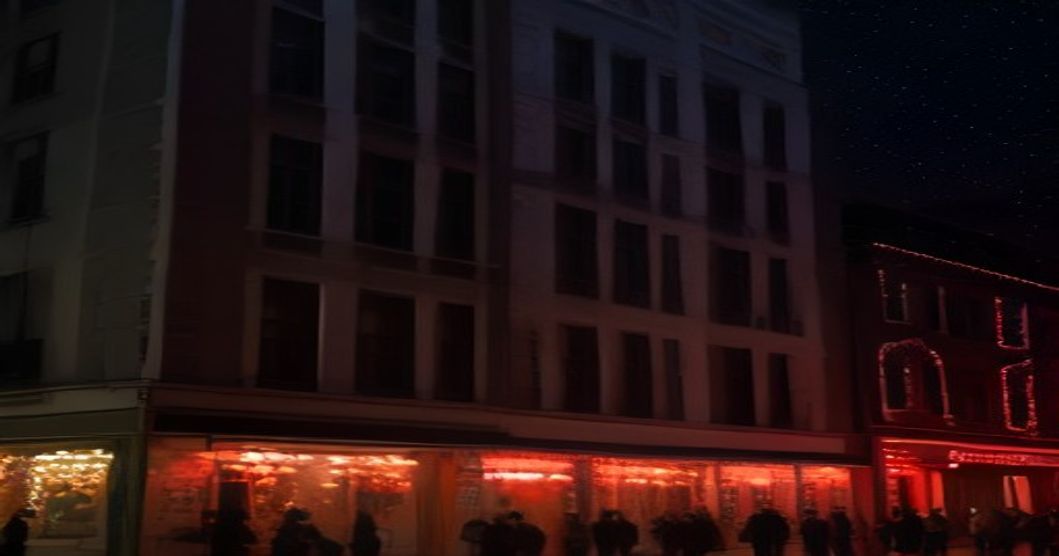
Window sill garland lit from within serves a dual purpose: it signals warmth and activity to pedestrians outside while framing the dining room interior for guests seated near the glass. In dense commercial corridors, think the historic main streets of New Jersey, the Back Bay in Boston, or the waterfront districts of Maryland and Delaware, a lit window display is the single most powerful curb-appeal signal you control. Our commercial teams use layered garland (a fuller base layer topped with a thinner, more cascading strand) and tuck warm white mini lights deep into the boughs so the light source is invisible, only the glow shows. See how this principle applies to retail contexts in our guide to storefront holiday lighting that drives foot traffic.
Outdoor Curb Appeal: Turning the Sidewalk Into a Reservation Funnel
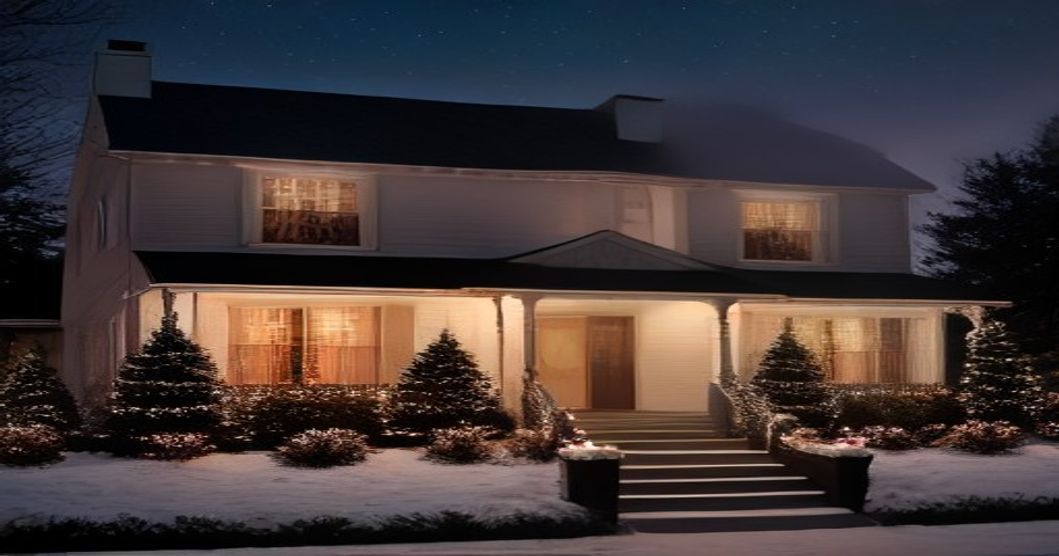
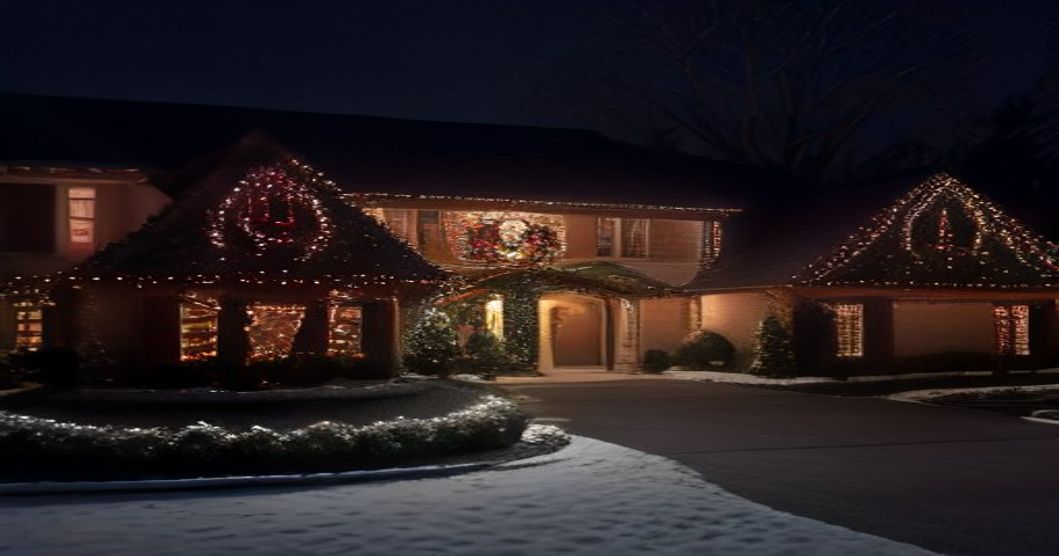
A restaurant's exterior is its first marketing impression for every person who walks or drives past. During the holiday season, that impression either says "come in, there is something special happening here" or it says nothing at all. Professionally installed outdoor lighting, roofline mini lights in warm white, garland-wrapped entrance columns, a wreath on every exterior door, communicates that the ownership invests in the guest experience before anyone has read the menu.
Entrance Architecture and Signage
Column-wrapped garland with integrated amber mini lights framing an entrance creates a literal portal effect, guests feel they are stepping into a curated holiday experience rather than just another restaurant. Signage lighting matters equally: warm white mini lights clustered around or beneath a restaurant sign provide reading illumination while reinforcing the seasonal brand. For businesses in our network spanning from coastal Maine properties to Florida Gulf Coast establishments, our design teams adjust density and coverage based on climate, architecture style, and the specific foot-traffic patterns of each location.
Patio and Outdoor Dining Areas
Even in colder-climate markets, New England, upstate New York, Pennsylvania, outdoor patio lighting extends the visual footprint of your holiday display into the streetscape. Mini lights strung along patio fencing or overhead structures (pergolas, awnings, trellis systems) read as festive and inviting even when the patio itself is not in active dining service for the season. In warmer-climate markets like Florida, professionally lit patios actively extend outdoor dining into the holiday season, creating dining experiences that guests specifically seek out and photograph. Our commercial lighting services include full patio design as part of the initial site assessment.
The August Booking Advantage: Why Smart Restaurants Plan Five Months Early
The single most common mistake restaurants make with holiday lighting is treating it as a November project. By the time October ends, professional commercial installation crews across the entire Holiday Lights Decor franchise network, from the Vermont and New Hampshire teams to the Maryland and New Jersey crews, are booked solid. Restaurants that call in November are either turned away entirely or forced to accept whatever installation window remains, which is rarely the one that works best for their operational schedule.
Why August Is the Strategic Window
August booking serves three concrete business interests. First, it guarantees your preferred installation date, typically a Monday or Tuesday morning when your dining room is at its quietest. Second, it gives the design team time to source specialty materials: specific garland densities, custom wreath sizes, commercial-grade mini light strings in exact quantities. Third, it often qualifies restaurants for early-bird pricing that our franchise locations pass along to clients who commit before the fall rush begins. Our blog post on August early-bird booking benefits details exactly what that advantage looks like in dollar terms. For the broader seasonal planning picture, our guide on when to book Christmas light installation covers timelines for every type of commercial property.
What the Installation Day Actually Looks Like
A professional commercial crew arrives with a pre-engineered plan: outlet locations mapped, extension cord runs calculated to stay below 80 percent of circuit capacity, all hardware pre-assembled. For a mid-size restaurant (2,500–4,000 sq ft dining area plus exterior), a two-person crew typically completes installation in four to six hours. Your team opens for lunch service on schedule. Compare that to the DIY alternative: three employees spending a full Sunday, 14 trips to a big-box store for additional extension cords, and a blown breaker discovered at 5:45 PM on a Friday night. The professional route is not a luxury, it is operational risk management.
Comparing DIY vs. Professional Commercial Holiday Lighting
| Factor | DIY Installation | Professional Commercial Installer |
|---|---|---|
| Electrical Safety | Owner/staff responsible; no load calculation | Licensed crew performs load calculation; UL-listed commercial hardware |
| Labor Cost | Staff time diverted from service/prep | Flat project rate; staff stays on core duties |
| Material Quality | Consumer-grade; typically 1,000–2,000 hr rating | Commercial-grade; 25,000+ hr rated mini lights and garland |
| Design Cohesion | Improvised; varies by who's available that day | Pre-engineered plan; consistent placement every year |
| Takedown & Storage | Staff time again; storage in-house | Included in service; equipment stored by installer |
| Scheduling Certainty | Whenever staff can manage it | Guaranteed date locked in August; no November scramble |
| Instagram Impact | Functional at best | Designed for photography; consistent guest-generated content |
For a detailed breakdown of what professional commercial installation costs and how to evaluate competing bids, our Christmas light installation cost guide provides realistic ranges by property type and scope. And if you are weighing whether a permanent installation makes long-term financial sense for your restaurant, our permanent Christmas lights cost comparison lays out the multi-year math clearly.
Building a Holiday Lighting Plan That Works Season After Season
The most effective restaurant holiday lighting programs are not annual one-off projects, they are documented systems that improve incrementally each year. After your first professional installation, a well-organized installer will provide a shot list (photos of every placement), a material inventory (strand counts, garland footage, wreath sizes), and an electrical map. Year two, the crew walks in, pulls the plan, and has the restaurant lit in half the time. Year three, you can request refinements based on what drove the most social engagement the prior season.
Integrating Holiday Lighting Into Your Marketing Calendar
Coordinate your installation date with your marketing team. The day professional lighting goes up is a content day: shoot Reels of the crew installing, photograph the finished host stand, capture the bar garland glowing at dusk. Post the reservation link in every caption. Restaurants that treat installation day as a marketing event, rather than a logistical task to hide, generate measurable spikes in OpenTable and Resy bookings within 48 hours of posting. That is the compound effect of great lighting: it earns revenue on the night guests sit under it and on every night those guests' social posts earn impressions afterward.
Removal and Storage: Closing the Loop Professionally
January is brutal for restaurant margins. The last thing ownership needs is staff spending three days in the first week of the new year wrestling garland off ceiling beams. Professional removal, included in Holiday Lights Decor's removal and storage service, means everything comes down cleanly, garland is stored properly to prevent needle drop and shape loss, and mini light strands are tested and rewound so they are ready for next October. It is the detail that most restaurant operators overlook the first time, and never overlook again after experiencing it once.
Frequently Asked Questions
How much does professional holiday lighting installation cost for a restaurant?
Professional holiday lighting installation for a restaurant typically ranges from $1,800 to $6,500 depending on square footage, the scope of indoor versus outdoor coverage, material selections, and regional labor rates. A small bistro with interior garland, a lit host-stand wreath, and basic exterior mini lights generally falls in the $1,800–$2,800 range. A full-service restaurant with roofline work, full interior beam-draping, bar garland, window displays, and patio lighting can run $4,000–$6,500 or more. These figures include commercial-grade materials, professional installation, and end-of-season removal and storage. Our Christmas light installation cost guide provides a detailed breakdown by project type.
What is the best light color for restaurant holiday ambiance?
Warm white (2,700 K) and amber (2,200 K) are the best light colors for restaurant holiday ambiance because they replicate the psychological warmth of candlelight, lower perceived noise levels, and make food and faces look more appealing on camera. Cool white or daylight-spectrum lights (5,000 K+) create a clinical feel that works against the cozy holiday atmosphere most restaurants want to project. For high-ceilinged spaces, a layered approach, amber mini lights inside garland for close warmth, warm white strands at height for general glow, creates depth without harshness. Our article on color temperature science explains the Kelvin scale in practical terms.
When should a restaurant book holiday lighting installation?
Restaurants should book holiday lighting installation in August to guarantee their preferred date and access early-bird pricing. By October, professional commercial installation crews across the Holiday Lights Decor franchise network, serving markets from Maine through Florida, are heavily booked. November availability is extremely limited, and the remaining slots are rarely on the low-traffic weekday mornings that work best for restaurant operations. Booking in August also gives designers time to source specific garland densities and custom wreath sizes. See our full breakdown in the August early-bird booking guide.
How do holiday lights increase restaurant reservations?
Restaurant holiday lighting increases reservations through three mechanisms. First, warm ambient lighting extends dwell time by 18–22 percent, which signals to arriving guests that the restaurant is lively and worth waiting for, a social proof cue that drives same-night walk-ins and future bookings. Second, photogenic garland and wreath displays generate guest social media content that earns organic impressions on Instagram and TikTok, each post functioning as a personal recommendation to the poster's followers. Third, professionally lit exteriors convert pedestrian foot traffic into first-time reservations by communicating, without a single word, that the ownership invests in the guest experience. Restaurants in the Holiday Lights Decor network have reported November reservation increases of 20–40 percent in the season following their first professional commercial installation.
Does Holiday Lights Decor serve restaurants outside New England?
Yes. Holiday Lights Decor is a nationwide franchise network serving restaurants and commercial properties across Maine, Vermont, New Hampshire, Massachusetts, Rhode Island, Connecticut, New York, New Jersey, Pennsylvania, Delaware, Maryland, and Florida. Whether you operate a waterfront seafood concept on the Maine coast, a multi-location group in the New York metro area, or a high-volume dining destination in South Florida, our commercial teams provide site assessments, custom design plans, professional installation, and end-of-season removal and storage. Visit our commercial services page or request a free estimate to connect with your regional team.
Can Holiday Lights Decor handle garland and wreath installation as well as string lights?
Absolutely. Holiday Lights Decor's commercial restaurant packages routinely include custom garland runs, professionally constructed wreaths with integrated mini lights, decorative bows, and all associated hardware for interior and exterior mounting. Our design teams source commercial-grade fresh-look garland in multiple density options, from standard 9-gauge to ultra-lush 15-gauge, and construct wreaths in sizes from 24 inches for host stands to 48 inches or larger for exterior entrance applications. All garland and wreaths are specified in the design plan before installation day, so there are no last-minute substitutions or shortages. Explore the full scope of our holiday lighting services or review our professional design consultation process at this planning guide.
The holiday season is the highest-stakes revenue period on the restaurant calendar. Warm white and amber mini lights, lush garland at the bar and host stand, and a photogenic wreath in your front window are not cosmetic choices, they are calculated investments in dwell time, social reach, and reservation volume. Holiday Lights Decor's commercial installation teams are ready to walk your space, engineer a design that performs on every level, and have it installed before your competitors have even started thinking about it. Request your free commercial estimate today and claim your August installation date before the schedule fills.