Key Takeaways
- Illuminated storefronts increase customer dwell time by up to 30% and meaningfully lift purchase intent during the holiday season, according to retail environment research.
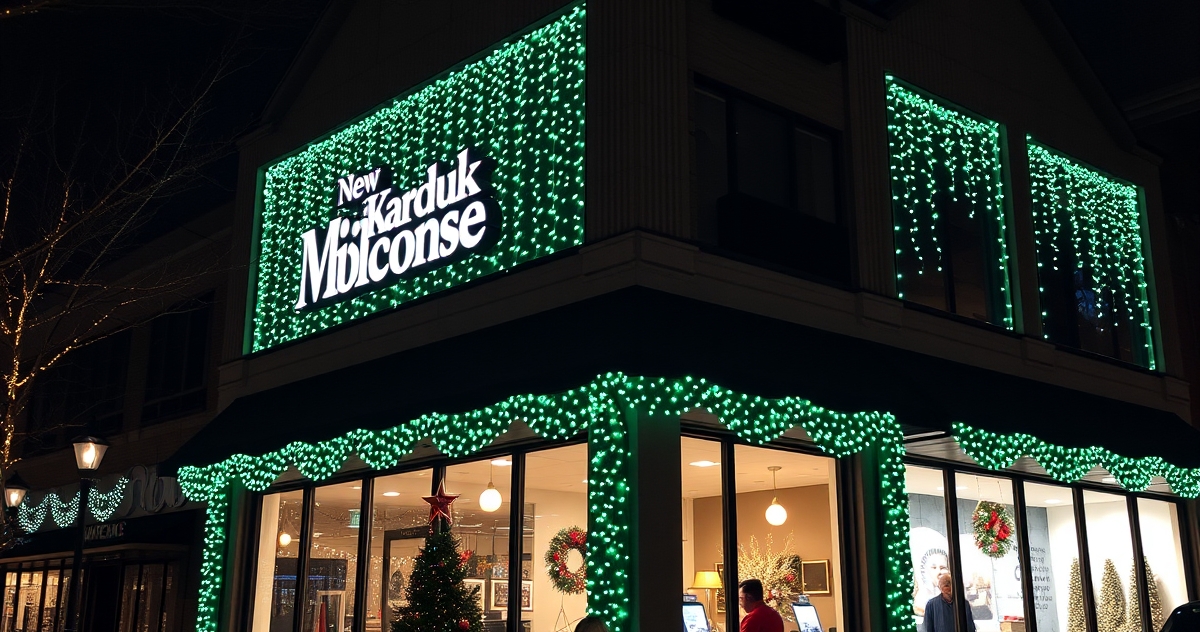
- Display configurations, window frame mini lights, C9 canopy outlines, entrance arches, and garland-draped facades, create layered visual cues that pull shoppers off the street and through your door.
- Warm white and cool white lighting serve distinct psychological roles: warm white signals welcome and intimacy; cool white projects premium, modern appeal.
- Booking your commercial installation in late summer or early fall locks in the best dates before the rush, franchise crews across the Northeast and Florida fill fast.
- Holiday Lights Decor's nationwide franchise network guarantees brand-quality installs with consistent materials and techniques whether your location is in Miami, Boston, or Philadelphia.
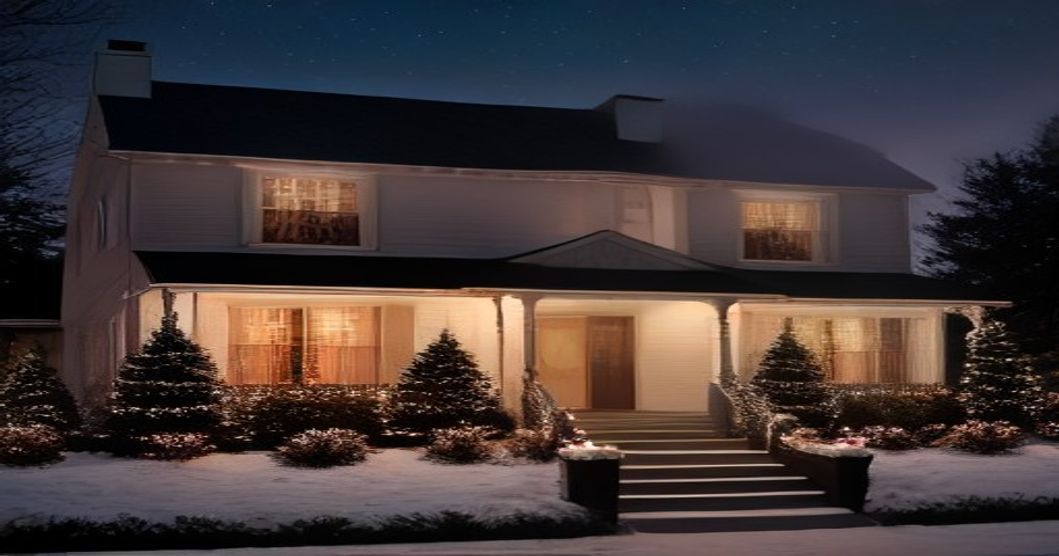
A restaurant owner in Hartford noticed something telling the December she finally invested in professional holiday lighting: foot traffic during the 5–7 p.m. window, her historically dead zone, jumped by nearly a quarter. She hadn't changed her menu, her hours, or her signage. She'd added warm white mini lights to her window frames, a C9 canopy outline above the entrance, and fresh garland looped along the porch rail. The street simply couldn't ignore her anymore. That's not luck. That's what intentional commercial storefront holiday lighting installation does, and the data backs it up.
Why Illuminated Storefronts Are a Proven Foot-Traffic Driver
Research on retail atmospherics consistently shows that lighting is the single most powerful environmental variable influencing whether a passerby pauses and enters. A widely cited study published in the Journal of Retailing and Consumer Services found that warm, ambient exterior lighting increased perceived store warmth, which in turn raised purchase intent scores by 17–24% compared to unlit control storefronts. A separate analysis by the Retail Design Institute found that illuminated window displays extended pedestrian dwell time, the number of seconds a person stops and looks, by an average of 26–31%.
During the holiday season, those numbers compound. Shoppers are already primed to spend; they just need a visual reason to choose your door over the one next to it. Lighting creates what researchers call a "luminance contrast effect", your storefront pops against the darker, colder backdrop of a December evening, and the brain registers it as warm, active, and worth investigating. For commercial property owners, that instinct is pure opportunity.
For a deeper look at how color temperature shapes customer perception, our guide on the science of warm vs. cool white holiday lighting walks through the psychology in detail. And if you're curious how the tradition of storefront illumination got its start, the story of Edison's 1882 Christmas display is a fascinating origin point.
The Psychology of Warm White vs. Cool White for Commercial Spaces
Choosing between warm white and cool white isn't an aesthetic coin flip, it's a strategic decision rooted in brand positioning and the emotional response you want to trigger in potential customers.
Warm White (2700K, 3000K)
Warm white light mimics candlelight and incandescent glow. For retail environments, especially restaurants, boutiques, spas, and hospitality businesses, it signals comfort, quality, and welcome. Mini lights strung in warm white across a window frame create an almost irresistible hearth effect from the sidewalk. C9 bulbs in warm white along a roofline read as classic Americana, evoking the nostalgic holiday imagery that drives emotional spending.
Cool White (5000K, 6000K)
Cool white delivers a crisp, contemporary edge that suits electronics retailers, modern apparel brands, medical and professional offices, and any business that wants to project precision and prestige. Cool white mini lights on a grid display or window silhouette feel architectural and intentional. Cool white C9 bulbs create sharp roofline definition that photographs well for social media, a secondary marketing benefit that warm white sometimes lacks.
Blended Approaches
Many of our most effective commercial installations combine both temperatures strategically: warm white garland draping a doorway for welcome, cool white C9s outlining the roofline for visibility from a distance. The contrast creates visual depth that a single-temperature scheme can't achieve. Explore our guide to holiday color psychology for more on how hue and temperature interact in seasonal displays.
Display Configurations That Maximize Street Visibility
Not all light placement delivers equal return. Professional commercial installers evaluate sightlines, competing visual noise, and architectural geometry before a single clip goes up. Here are the configurations that consistently outperform:
Window Frame Outlining with Mini Lights
Mini lights, typically 5mm or M5 LED bulbs on green or white wire, run along the interior perimeter of storefront windows to create a glowing frame effect visible from 50–100 feet away, depending on street width and ambient competition. This technique works on virtually every building type, from historic brick storefronts in Vermont to glass-curtain retail centers in South Florida. The key is consistent spacing (4–6 inches between bulbs) and a clean corner wrap that looks intentional rather than improvised. See our deep dive on mini light versatility beyond standard Christmas decorating for inspiration on unconventional commercial applications.
C9 Canopy and Roofline Outlines
C9 bulbs, the large, traditional 5-watt-equivalent LED globes spaced 12–18 inches apart on heavy-duty SPT-2 wire, are the workhorses of commercial facade lighting. Their size and lumen output make them legible from a moving vehicle, which mini lights simply can't match. A canopy outlined in warm white C9s turns an ordinary awning into a landmark. A roofline run in cool white C9s gives a multi-tenant strip center a cohesive, upscale identity that elevates every tenant inside it. Our comprehensive commercial lighting guide for year-round customer attraction covers C9 specifications in greater detail.
Entrance Arches and Portal Lighting
The entrance is your highest-value real estate. An arch constructed from garland, mini lights, and decorative bows frames the threshold in a way that communicates celebration and invitation simultaneously. For restaurants and event venues, a well-lit entrance arch is frequently photographed and shared on social media, organic marketing with a shelf life that outlasts the season. Garland styled with professional techniques (tight spiral wrapping, hidden wire management) elevates the effect dramatically; our garland styling secrets post covers the methods our crews use on high-visibility commercial installs.
Column and Pillar Wrapping
If your storefront has architectural columns, common in older downtown districts across New England and the Mid-Atlantic, spiral-wrapped mini lights transform them into vertical beacons. The trick is a consistent wrap angle (typically 45 degrees) and matching wire color to the column finish. White wire on white columns nearly disappears during the day, leaving only the light effect at night.
Window Display Integration
Interior-facing mini light strings, C9 strands mounted to window display risers, and backlit garland panels create a visual flow that draws the eye from outside to inside, giving passersby a preview of your interior before they've committed to entering. For a full breakdown of this indoor-outdoor visual technique, see our post on window display lighting and visual flow.
Configuration Comparison: What Works Best for Your Business Type
| Business Type | Recommended Configuration | Primary Light Product | Color Temperature | Visibility Range |
|---|---|---|---|---|
| Full-service restaurant | Window frames + entrance arch + canopy outline | Mini lights + garland | Warm white | 50–80 ft |
| Retail boutique | Window frame + roofline C9 run | Mini lights + C9 bulbs | Warm or cool white | 75–120 ft |
| Strip mall / multi-tenant | Full roofline C9 + entrance per tenant | C9 bulbs | Cool white | 100–200 ft |
| Professional office / medical | Window frames + column wraps | Mini lights | Cool white | 40–70 ft |
| Hotel / hospitality | Full facade: roofline + columns + entrance arch + garland | C9 bulbs + garland + mini lights | Warm white blend | 150–300 ft |
| Auto dealership / large format | Perimeter C9 + lot string lighting | C9 bulbs | Cool white or mixed | 200–500 ft |
Planning Your Commercial Installation: Timelines, Budgets, and What to Expect
The single biggest mistake commercial clients make is waiting until October to call. By then, the best installation windows are gone. Professional crews across the Holiday Lights Decor franchise network, serving markets from Portland, Maine to Miami, Florida, begin booking commercial accounts in July and August. Multi-location brands and property management companies often secure their full portfolio in a single planning session held before Labor Day.
Typical Commercial Timeline
- July, August: Design consultation, site measurement, product specification, contract execution. Our professional design consultation guide walks through what that process looks like.
- September: Material procurement and pre-build for custom arch and garland components.
- October, early November: Installation. Premium dates fill first; most commercial clients want to be lit before Veterans Day to capture early holiday foot traffic.
- November, January: Active display season. Our crews perform mid-season maintenance checks and bulb replacements as part of full-service commercial packages.
- January, February: Takedown and storage. We handle removal and store commercial-grade product for reuse the following season, reducing your annual cost over time. Details at removal and storage services.
Budget Benchmarks
Commercial holiday lighting budgets vary widely by facade size, product specification, and market. A focused window-frame-and-entrance treatment for a 1,200-square-foot boutique typically runs $800–$2,000 installed. A full hotel facade with roofline C9s, wrapped columns, garland arches, and custom bows can run $8,000–$25,000 or more. The ROI calculation is straightforward: if a $1,500 installation drives even a 10% lift in December transactions, most retailers recover the cost in days. For budget planning strategies, our post on holiday lighting budget planning provides a useful framework adaptable to any market.
Explore our full commercial holiday lighting services for package details, or browse all services to understand the scope of what a full-service installation covers.
National Franchise Coverage: Consistent Quality from Maine to Florida
Multi-location retailers and national property management companies face a problem that single-location businesses don't: how do you ensure the Stamford, Connecticut location looks as polished as the Boca Raton location when you're not physically present at either install?
Holiday Lights Decor's franchise network solves this with standardized installation protocols, centrally vetted product sourcing, and shared design templates that individual franchise owners execute locally. Every franchise uses the same commercial-grade C9 wire gauge (SPT-2, 18 AWG), the same LED mini light specifications, and the same garland density standards, so your brand's holiday presentation is consistent whether a customer visits your New Hampshire location or your Delaware one.
This matters enormously for franchise businesses, shopping center operators, and hospitality brands whose visual identity is a competitive asset. A single franchise owner cutting corners on wire gauge or garland fullness doesn't just affect their location, it dilutes your brand. Our network's quality controls prevent that. Local crews bring the community knowledge (permit requirements in Providence differ from those in Annapolis), while the franchise system provides the brand-level consistency you'd expect from a corporate install team.
If your portfolio spans multiple states, contact us through our national accounts inquiry page to discuss coordinated multi-site scheduling and volume pricing. For municipal and downtown district lighting programs, another area where consistent, professional installation is critical, see our municipal holiday lighting services.
Smart Add-Ons That Extend Your Investment
The most successful commercial clients treat holiday lighting not as a one-time decoration but as a platform they improve annually. A few add-ons that consistently deliver outsized value:
- Permanent LED systems: For storefronts that want year-round architectural lighting, Valentine's Day reds, St. Patrick's Day greens, Independence Day red-white-blue, permanent lighting systems use color-programmable fixtures installed once and controlled via app. The per-season cost drops dramatically after year one.
- Tree and shrub lighting: Parking lot trees and landscaping beds wrapped in warm white mini lights extend your display's footprint and create a cohesive arrival experience. See tree lighting services for scope and pricing.
- Smart home and timer integration: Commercial timers and smart controls ensure your display runs during peak foot-traffic hours (typically 4–10 p.m.) without wasting energy overnight. Our post on smart home integration for holiday lights covers the technology options available to commercial clients.
- Wreath and bow programs: Door wreaths and window wreaths with professional bow construction are often overlooked, but they signal care and attention at close range, the point where a passing pedestrian decides whether to reach for the door handle. Our wreath decoration mastery guide explains why this detail matters more than most owners realize.
Frequently Asked Questions
How early should a commercial business book holiday lighting installation?
Commercial businesses should book their holiday lighting installation by August or early September at the latest. Holiday Lights Decor franchise crews across the Northeast and Florida begin filling commercial installation calendars in July. Multi-location accounts and large commercial properties, hotels, strip centers, corporate campuses, typically need the most lead time because site surveys, custom product orders, and crew scheduling all require coordination well ahead of the October, November install window. Businesses that wait until October frequently find their preferred dates unavailable. For more on early booking benefits, see our post on Christmas in July booking and early-season savings.
What is the difference between C9 bulbs and mini lights for commercial storefronts?
C9 bulbs are large, traditional-style LED globes (approximately 1.5 inches in diameter) spaced 12–18 inches apart on heavy-duty wire, designed for roofline outlines, canopy edges, and facades that need to be visible from a moving vehicle 100–300 feet away. Mini lights are small 5mm LED bulbs spaced 4–6 inches apart, best suited for window frames, garland fill, tree wrapping, and detail work visible at pedestrian distances of 10–75 feet. Most professional commercial displays use both: C9 bulbs for large-scale structural definition and mini lights for close-range texture and warmth. Using only one product type typically produces a display that reads as either too crude (only C9s) or too subtle (only mini lights) from the street.
Does holiday lighting actually increase sales, or is the ROI unproven?
The ROI on professional holiday lighting is well-supported by retail environment research. Studies in retail atmospherics journals have documented a 17–24% lift in purchase intent scores for illuminated vs. unlit storefronts, and dwell time, the key precursor to purchase, increases by 26–31% on average when warm ambient lighting is present. These figures apply during the holiday season when shoppers are already in purchase mode and visual competition among storefronts is highest. Individual results vary by location, traffic volume, and display quality, but most commercial clients in the Holiday Lights Decor network report recovering their installation investment within the first two to three weeks of December foot traffic.
Can Holiday Lights Decor handle multi-location commercial accounts across different states?
Yes. Holiday Lights Decor operates as a nationwide franchise network currently serving Maine, Vermont, New Hampshire, Massachusetts, Rhode Island, Connecticut, New York, New Jersey, Pennsylvania, Delaware, Maryland, and Florida. Multi-location accounts, retail chains, hospitality brands, property management companies, can coordinate installations across the full service territory through a single national account relationship. Each local franchise owner executes to standardized product specifications and installation protocols, ensuring your holiday display looks consistent and brand-appropriate at every location. Contact us via our national accounts page to discuss multi-site scheduling and volume pricing.
What happens to the lights after the holiday season ends?
Holiday Lights Decor's commercial service packages include professional takedown and storage at the end of the season. Our crews remove all product carefully to preserve wire integrity and bulb life, inventory your commercial-grade C9s, mini lights, and garland components, and store them for reuse the following season. This significantly reduces your year-two cost and ensures you're not starting from scratch every December. Commercial-grade product stored properly by trained crews typically lasts 5–8 seasons, making the per-season cost of a professional installation considerably lower than it appears in year one. Learn more about our removal and storage services.
Should I use warm white or cool white lighting for my storefront?
The right color temperature depends on your brand positioning and the emotional response you want to trigger. Warm white (2700K, 3000K) signals welcome, comfort, and warmth, ideal for restaurants, boutiques, spas, and hospitality businesses where intimacy and approachability drive conversions. Cool white (5000K, 6000K) projects precision, modernity, and premium quality, better suited to electronics retailers, professional offices, medical practices, and contemporary apparel brands. Many high-performing commercial displays blend both temperatures: warm white garland and mini lights at entrance level for human-scale welcome, cool white C9 roofline outlines for large-scale visibility and architectural definition. Our color temperature science guide explains the underlying psychology in detail.