Key Takeaways
- Thomas Edison's December 1882 electric display at Menlo Park was the direct ancestor of every professional holiday lighting installation in America.
- Edison's team pioneered weatherproofing, secure mounting, and strategic spacing, principles that remain foundational to quality installs today.
- Nationwide newspaper coverage transformed electric lighting from an industrial curiosity into a beloved domestic tradition.
- Modern C9 LED bulbs, warm white palettes, and programmable controllers all trace their lineage back to Edison's original 80-bulb showcase.
- Your local Holiday Lights Decor team carries that legacy forward for homeowners and businesses across the country.
On a crisp December evening in 1882, curious onlookers gathered outside Thomas Edison's Menlo Park laboratory, drawn by an unprecedented sight: red, white, and blue electric bulbs twinkling against the winter darkness. This wasn't just another of Edison's inventions, it was the birth of a tradition that would transform how Americans celebrate Christmas forever.
Edison's electric Christmas display didn't happen by accident. Just three years after perfecting his incandescent light bulb, the brilliant inventor recognized an opportunity to showcase his revolutionary technology in a way that would capture the public's imagination. What started as a business demonstration became the foundation of every strand of warm white C9 bulbs that professional installers hang along rooflines across the country today.
The Menlo Park Christmas Miracle
Edison's Menlo Park laboratory complex served as America's first organized research and development facility. By December 1882, Edison and his team had been perfecting electric lighting for commercial use, but they needed a spectacular way to demonstrate its potential for everyday Americans.
The solution was ingeniously simple: transform the laboratory grounds into a winter wonderland using electric lights. Edison's team hand-wired 80 individual bulbs in patriotic red, white, and blue, stringing them along the laboratory buildings and nearby trees. Unlike today's weather-resistant installations, each bulb required careful protection from the harsh December elements.
The display operated using Edison's direct current system, powered by steam-driven dynamos housed within the laboratory. Visitors could walk through the illuminated grounds, witnessing firsthand how electric light could transform ordinary spaces into magical environments. For most Americans at the time, this was their first glimpse of artificial lighting beyond gas lamps and candles.
Word spread quickly through New York newspapers and telegraph lines. The novelty of electric Christmas lights drew visitors from across the region, wealthy industrialists, curious inventors, and families seeking a glimpse of the future.
Hand-Wired Innovation: The Technical Story
Creating Edison's 1882 Christmas display required unprecedented technical innovation. Each of the 80 bulbs needed individual wiring, careful spacing, and protection from the elements. Edison's team developed early versions of weatherproofing techniques that professional installers still rely on today.
The red, white, and blue color scheme wasn't just patriotic, it was practical. Colored glass bulbs were easier to manufacture consistently than clear ones, and the bold colors created maximum visual impact in an era before amplified lighting. The warm glow of Edison's incandescent filaments provided the first glimpse of what we now recognize as warm white lighting, though the colored glass filtered the output into distinctive hues.
Unlike modern LED installations, Edison's display required constant maintenance. Team members monitored the system throughout each evening, replacing burned-out filaments and adjusting connections. The entire display consumed significant power, making it an expensive, but unforgettable, demonstration of electric lighting's potential.
The technical challenges Edison faced in 1882 mirror those professional installers encounter today. Proper spacing, secure mounting, weather protection, and electrical safety remain fundamental concerns for any quality Christmas light installation, whether it's a modest roofline display or a large-scale commercial property showcase.
Media Sensation Sparks National Interest
The New York Herald covered Edison's electric Christmas display extensively, describing it as "a fairy tale come to life." Other newspapers picked up the story, spreading word of the illuminated laboratory across America. For the first time, electric lighting wasn't just functional, it was beautiful, magical, and aspirational.
The media coverage achieved exactly what Edison hoped: it positioned electric lighting as the future of American homes and businesses. Wealthy visitors returned to their communities with stories of the incredible Christmas display, planting seeds for the electric lighting industry that would flourish over the following decades.
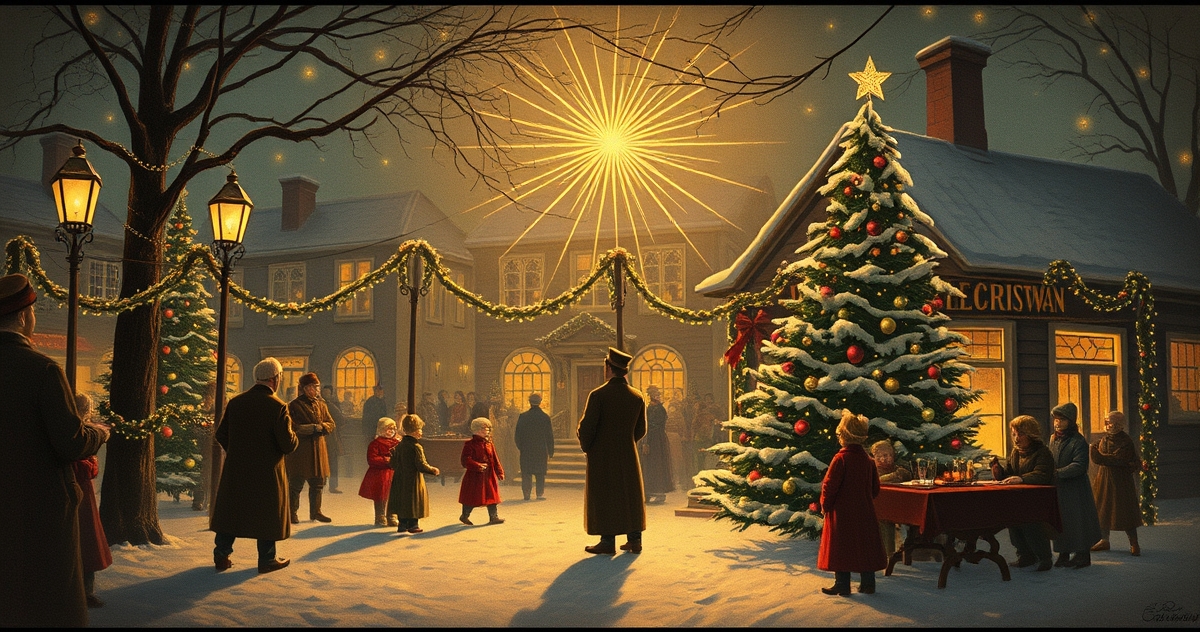
Photography of the era couldn't capture the full impact of Edison's lights, so newspaper illustrations and written descriptions carried the story. Artists' renderings showed families gathered beneath glowing trees, children pointing in wonder at the colorful bulbs, and the laboratory buildings transformed into a winter palace.
The publicity surrounding Edison's Christmas display contributed to growing public acceptance of electric lighting for residential use. What began as industrial technology suddenly seemed approachable, even festive. This shift in perception proved crucial for the broader adoption of electric power, and it planted the cultural seed for the holiday lighting industry Americans love today.
From Laboratory Experiment to American Tradition
Edison's 1882 display directly influenced the first commercially available Christmas lights. By the 1890s, wealthy families could hire electricians to create custom holiday displays, though the cost remained prohibitive for most households. The tradition gradually democratized as manufacturing improved and prices dropped through the early twentieth century.
The technical principles Edison established, proper spacing, secure mounting, weather protection, remain fundamental to professional Christmas light installation everywhere. Modern C9 LED bulbs trace their lineage directly back to Edison's incandescent originals, offering the same bold, visible impact with dramatically improved efficiency and longevity. That evolution is one reason homeowners across the U.S. can now enjoy elaborate displays that would have been unimaginable, and unaffordable, to all but the wealthiest families a century ago.
The patriotic red, white, and blue colors Edison chose evolved into the classic Christmas palette we recognize today. While modern displays incorporate warm white for timeless elegance, multicolor for festive energy, and cool white for contemporary appeal, the fundamental goal remains unchanged: transforming ordinary spaces into extraordinary experiences through the magic of light.
How Edison's Principles Map to Today's Professional Installations
| Edison's 1882 Challenge | Modern Professional Solution |
|---|---|
| Hand-wiring individual bulbs | Pre-tested commercial-grade LED strands |
| Weather protection for exposed filaments | IP-rated, UV-stabilized weatherproof fittings |
| Manual replacement of burned-out bulbs | Shunt-technology LEDs that keep the strand lit |
| Steam dynamo power supply | Low-voltage systems with GFCI protection |
| Static single-color display | Programmable RGB and warm white controllers |
| Seasonal teardown by laboratory staff | Professional removal and storage service |
Edison's Legacy in Today's Professional Holiday Lighting
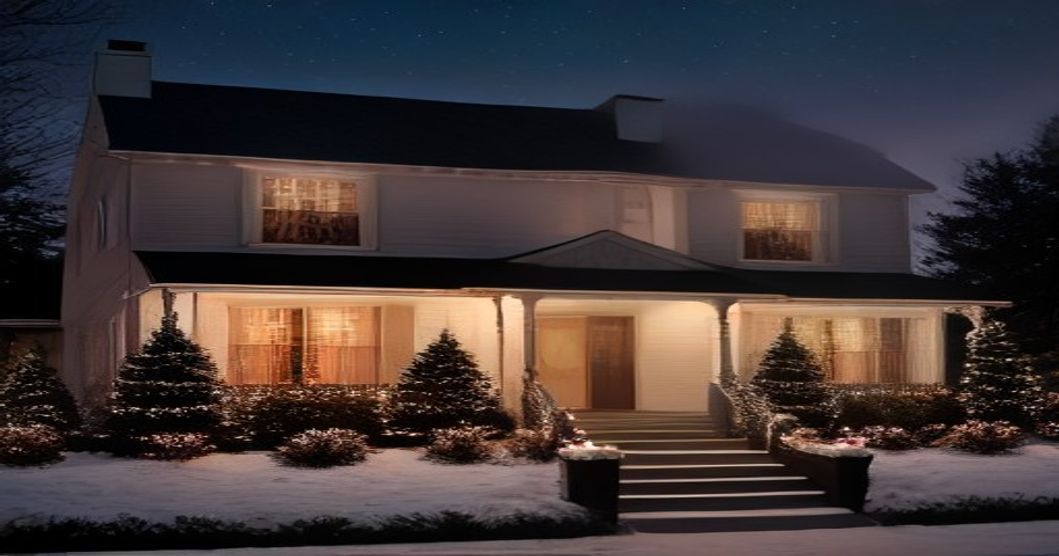
Every professionally installed Christmas display across the country connects to Edison's 1882 innovation. The same principles that guided his Menlo Park experiment, dramatic visual impact, technical reliability, and seasonal magic, drive the residential installations our teams complete for homeowners nationwide each season.
Modern homeowners can achieve effects Edison could only imagine using energy-efficient LED technology, programmable controllers, and weather-resistant components engineered specifically for outdoor use. Yet the fundamental appeal remains identical: creating wonder through the strategic placement of beautiful lights during the darkest time of year.
That same spirit extends well beyond single-family homes. Municipal governments, shopping districts, and corporate campuses commission large-format displays that echo the sense of community spectacle Edison created on those December evenings in 1882. Our municipal lighting services honor that tradition at the grandest scale, turning public spaces into destinations that bring entire communities together.
Professional installers honor Edison's legacy by maintaining the highest technical standards while embracing contemporary innovations. Whether designing a simple roofline outline, an elaborate estate installation, or a multi-building commercial property display, today's work builds upon the foundation Edison established more than 140 years ago. The lab may be long gone, but the vision, using light to create joy and wonder, lives on in every home and business that glows with holiday spirit each December.
Ready to carry on Edison's tradition at your own property? Contact your local Holiday Lights Decor team and let us design a display that would make the great inventor proud.
Frequently Asked Questions
Did Thomas Edison really invent Christmas lights in 1882?
Edison didn't invent Christmas lights per se, but he created the first electric Christmas display in December 1882 at his Menlo Park laboratory. The demonstration used 80 hand-wired red, white, and blue incandescent bulbs to showcase electric lighting's decorative potential, directly inspiring the commercial Christmas light industry that followed over the next several decades.
Why did Edison choose red, white, and blue for his Christmas lights?
Edison selected red, white, and blue bulbs for both practical and marketing reasons. Colored glass was easier to manufacture consistently than clear glass, the patriotic colors resonated with American audiences, and the bold hues created maximum visual impact. This color choice helped cement Christmas lights as a distinctly American holiday tradition.
How did Edison's display influence modern holiday decorating?
Edison's 1882 display established foundational principles still used by professional installers today: dramatic visual impact through strategic light placement, weather-resistant mounting, and the transformation of ordinary spaces into magical environments. Modern C9 LED bulbs and professional installation techniques trace directly back to innovations Edison's team developed for their historic display.
How did media coverage of Edison's Christmas lights shape the industry?
Extensive newspaper coverage transformed public perception of electric lighting from purely industrial technology to something beautiful and desirable for homes and gathering spaces. The nationwide attention generated by Edison's display laid the groundwork for the commercial Christmas light industry that emerged in the decades that followed, eventually making decorative lighting accessible to households across America.
What is the connection between Edison's incandescent bulbs and today's C9 LED lights?
Today's C9 LED bulbs are the direct descendants of Edison's original incandescent design. The large, faceted form factor was engineered to maximize visible light output, exactly what Edison needed for his 1882 demonstration. Modern versions deliver the same bold, warm glow using a fraction of the energy, with far greater lifespan and weather resistance than Edison's hand-wired originals.
How does Holiday Lights Decor carry on Edison's legacy today?
Our nationwide franchise network applies the same core principles Edison pioneered, precise placement, technical reliability, and a focus on creating wonder, to every residential, commercial, and municipal installation we complete. From design consultation through professional removal and storage, your local Holiday Lights Decor team handles every detail so the magic of the season shines as brightly as possible.