
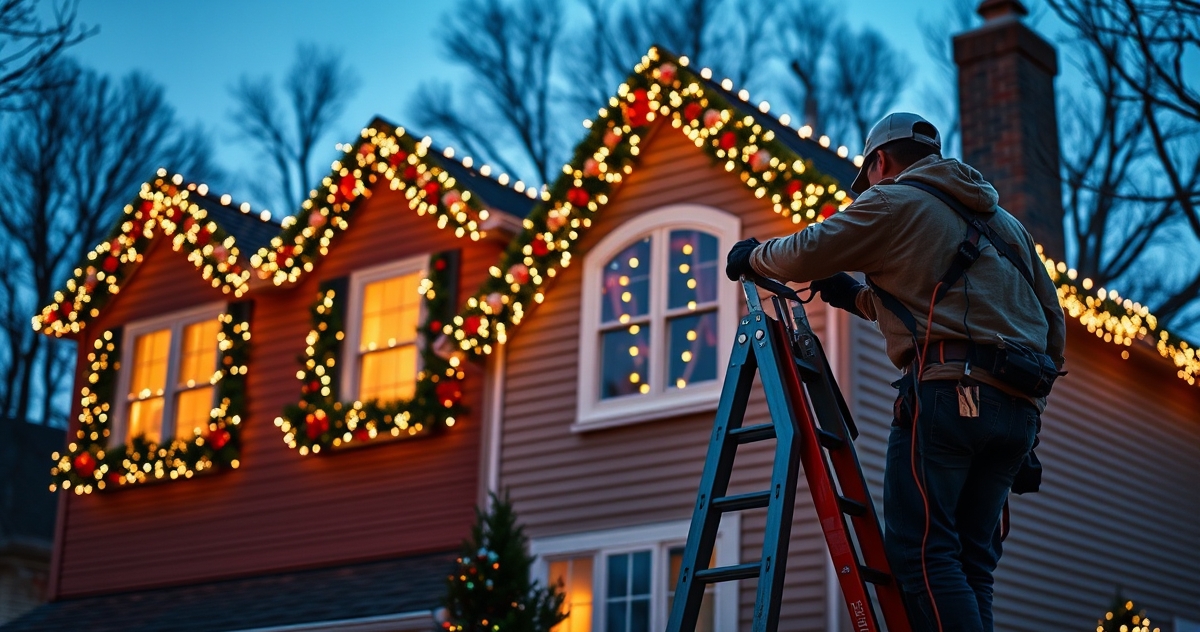
Christmas Tree Lighting
A Christmas tree lighting service that wraps living trees with commercial-grade lights, professionally installed and maintained.
Wrapping a living tree in lights is a craft, not a chore. A Christmas tree lighting service exists because doing it well takes the right strand lengths, the right clip and tie method, and someone who understands how a maple grows differently from a crepe myrtle. Homeowners with mature landscape trees buy this. So do property managers, town councils lighting a central square, and corporate campuses that want a clean, intentional look at the entrance. The alternative, an extension-cord tangle thrown up by a general handyman, sags by January and can strangle bark. Our local teams measure each trunk and canopy, calculate the lineal footage of lights required, and wrap so the result stays tight, even, and safe for the tree through the whole season.
In detail
What Christmas Tree Lighting involves
Living Landscape Trees, Not Cut Trees
This page is about lighting the living trees rooted in your landscape: the oak by the driveway, the row of maples along a corporate walkway, the specimen tree in a town square. That is different from decorating a cut or artificial indoor Christmas tree, which some people also mean when they say tree lighting. We do not set up your living-room tree. We wrap outdoor trunks and canopies that stay in the ground year after year. This is also distinct from our general roofline and eave lighting, which follows the architecture of a building. If a tree is the feature you want lit, and it is alive and outdoors, this is the service that covers it.
Outdoor Christmas Tree Decorators Who Know Bark
Good outdoor Christmas tree decorators think about the tree first and the lights second. Bark is living tissue, and a strand cinched too tight around a growing trunk cuts into it the same way wire around a sapling does. Our local crews wrap so the lights follow the surface without biting in, and they leave room for the seasonal movement a tree makes. They also account for how different species branch. A tightly upright ornamental takes wraps differently than a wide-spreading shade tree. The decorator's job is to make the finished tree read as deliberate from the street: consistent spacing between wraps, no dark gaps, no strand crossing over itself in a knot. That judgment is what separates a professional result from a weekend attempt.
Tree Wrapping Christmas Lights The Right Way
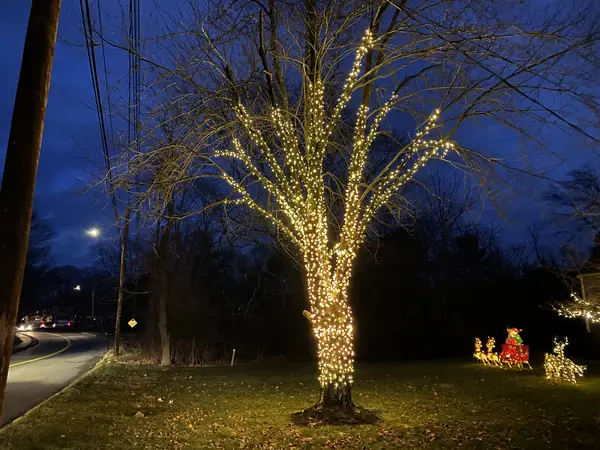
Tree wrapping with Christmas lights starts at the base of the trunk and spirals upward at an even pitch, so the spacing looks uniform from a distance. Wraps that are too far apart look sparse; wraps too close waste light and look heavy. We use commercial-grade strands rated for outdoor cold and moisture, secured so they do not slide down the trunk under their own weight or the first ice. The number of wraps per foot is a deliberate choice tied to how bright you want the tree to read at night. On thicker trunks the strand has to travel farther per wrap, which changes the footage. Our teams calculate this before the first light goes up, so you are not left with a half-lit tree and an empty box.
Commercial Christmas Tree Lighting At Scale
Commercial Christmas tree lighting has demands a single home tree does not. A corporate campus or retail center often wants a matched row of trees, identical in wrap height and density, lit on a single controlled schedule. Town squares need lighting that holds up to public foot traffic and looks intentional from every approach. Our local teams handle the power distribution, the timer or photocell control, and the layout planning that keeps a dozen trees consistent. We work around your operating hours so installation does not disrupt customers or staff. Because the same crew that installs also maintains through the season, an outage on a high-visibility tree gets addressed rather than left dark for weeks, which matters when the tree fronts your business.
Landscape Tree Lighting: Trunk And Canopy
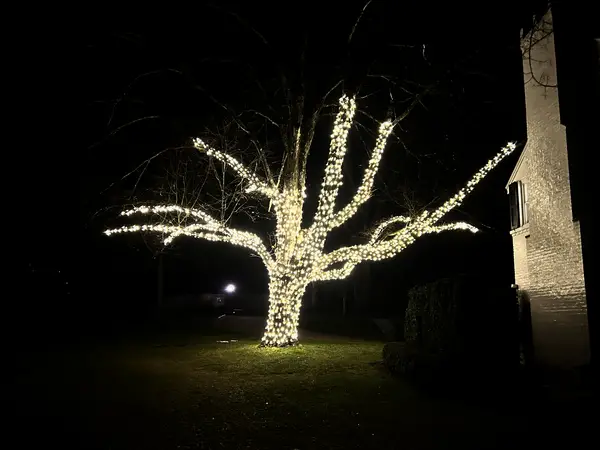
Landscape tree lighting divides into two decisions: how far up the trunk you wrap, and whether you carry lights into the canopy. Trunk-only wrapping gives a clean, architectural glow and is the most durable choice, since the trunk moves less than the branches. Carrying lights up into the canopy and out along major limbs creates a fuller, more dramatic effect but takes more strand, more labor, and more careful clipping so the lights survive wind. Species drives this too. A tree with an open, sculptural branch structure rewards canopy wrapping; a dense evergreen may look better lit only at the trunk and lower limbs. Our teams walk your property, look at each tree's form, and recommend the approach that suits both the tree and the look you want.
What Tree Lighting Costs
Price on tree lighting is driven mainly by lineal footage of lights, and that comes down to trunk diameter, how high you wrap, and whether the canopy is included. A single ornamental tree wrapped to a modest height is a small job; a mature shade tree wrapped trunk to canopy uses many times the strand and labor. Number of trees, access, and height requiring lifts also move the number. Most quotes bundle installation, the season's maintenance, takedown, and storage into one figure, so you are comparing a full-service price rather than just materials. Your local crew measures on site and gives a firm quote before any work begins, so there are no surprises after the trees are lit.
Frequently Asked
Questions we get about Christmas Tree Lighting
Available Where You Are
We currently offer this service in
Our work
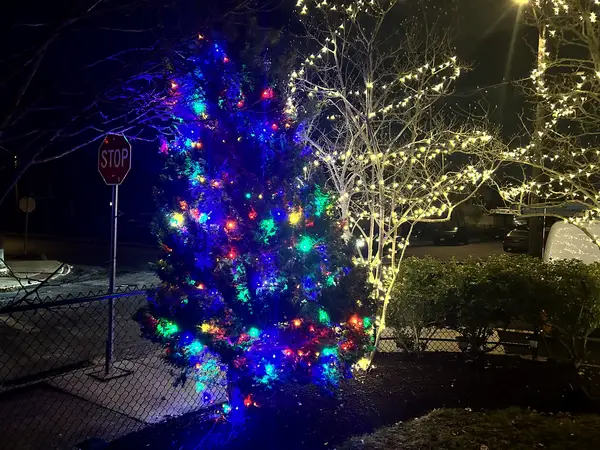
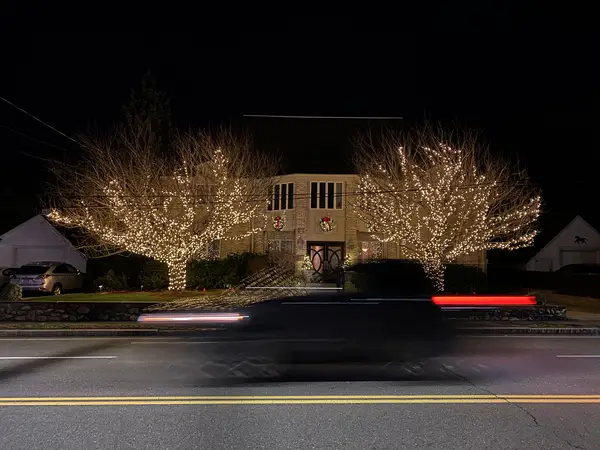
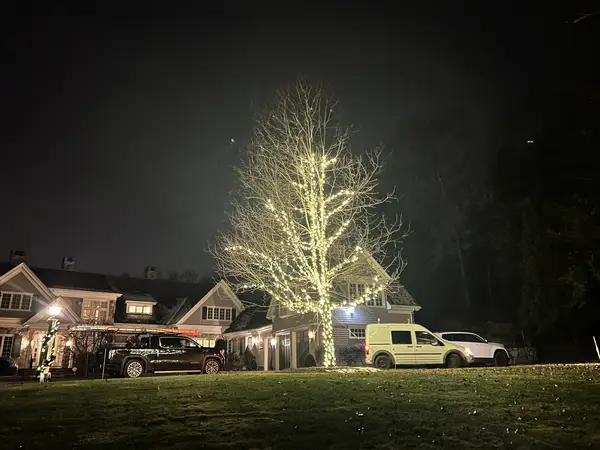
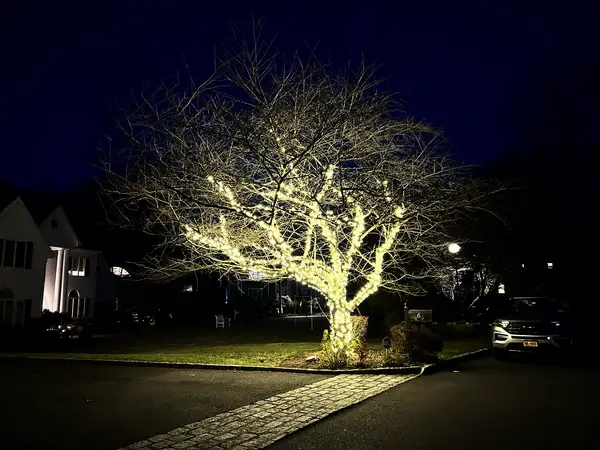
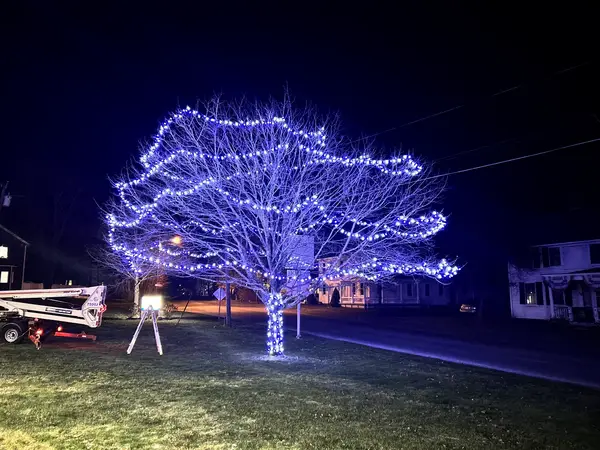
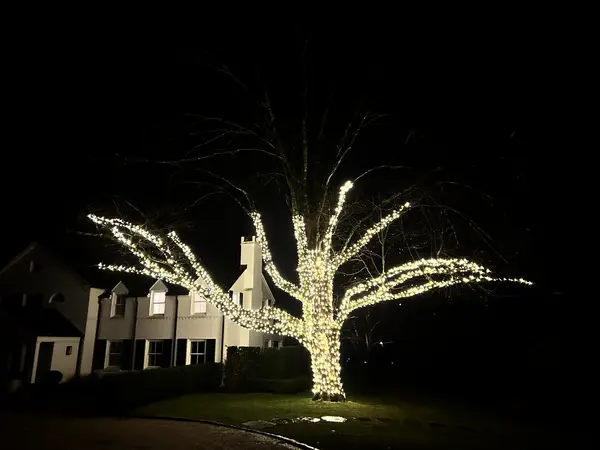
Christmas Tree Lighting, on the job
Our own photos, not stock.
Get Your Free Tree Lighting Quote
Tell us about your project and our team connects you with the right local crew, usually within 24 hours.
Related Services
Other services we offer
Residential
Turnkey holiday light installation for homes, design, installation, maintenance, takedown, and storage.
Learn more →Commercial
Large-scale displays for retail centers, hotels, restaurants, and corporate campuses.
Learn more →Permanent LEDs
Architectural permanent outdoor lighting, programmable color, app control, year-round accent.
Learn more →Municipal
Citywide holiday lighting programs, lamp posts, gazebos, town squares, and public displays.
Learn more →Removal
Post-season professional takedown, labeled storage, and multi-year rental programs.
Learn more →