Key Takeaways
- C9 bulbs come in five primary color families, warm white, cool white, multicolor, red, and green, each suited to a specific architectural style and curb-appeal goal.
- Spacing matters: 12-inch intervals create a dense, dramatic look; 18-inch intervals work better on long rooflines and Victorian-style homes where visual rhythm beats raw density.
- Professional-grade LED C9s last 50,000+ hours versus 1,000–3,000 hours for big-box incandescent strings, with lumen output that stays consistent across the entire run.
- Correct socket-count math, total roofline linear feet divided by spacing interval, prevents the most common DIY mistake: running out of bulbs mid-ridge.
- Holiday Lights Decor's multi-state network (from Maine to Florida) handles design, installation, takedown, and storage so your roofline looks polished every single season.
Picture a Pennsylvania farmhouse at 6 p.m. on Christmas Eve: every roofline edge traced in warm-white C9 bulbs, glowing like a string of harvest moons against a steel-gray sky. Or a beachfront New Jersey commercial strip where cool-white C9s make storefronts shimmer as though dusted with sea-spray frost. That single product, the C9 bulb, is responsible for some of the most memorable holiday lighting displays across the country, yet most homeowners and business owners dramatically underestimate how much color choice and spacing strategy shape the final result. This guide fixes that.
What Makes a C9 Bulb Different (and Why It Dominates Rooflines)
A C9 bulb is a cone-shaped, E17 intermediate-base lamp measuring roughly 1.25 inches in diameter and 2.75 inches tall, noticeably larger than a C7 and almost comically bigger than a mini light. That size is a feature, not a flaw. The broad silhouette catches the eye from a full city block away, which is precisely why C9s became the roofline standard for both residential and commercial holiday displays long before LED technology arrived. Today's professional-grade LED C9s push 1–2 watts per bulb while delivering the same throw and presence as the old 5-watt incandescent versions they replaced.
Because of their visual dominance, C9s set the entire tonal mood of a display. Get the color right and the spacing dialed in, and even a modest ranch home reads as deliberate and polished. Get either one wrong, and the display looks patchy or off-brand, like a beautifully wrapped gift with the wrong ribbon. That's why our design consultants across the Holiday Lights Decor network treat the C9 selection conversation as the foundational step in any professional design consultation.
C9 Bulb Color Options: What Each Look Communicates
Color is emotional shorthand. Before you order a single socket, decide what feeling you want a passerby to have at the end of your driveway.
Warm White (2700K, 3000K)
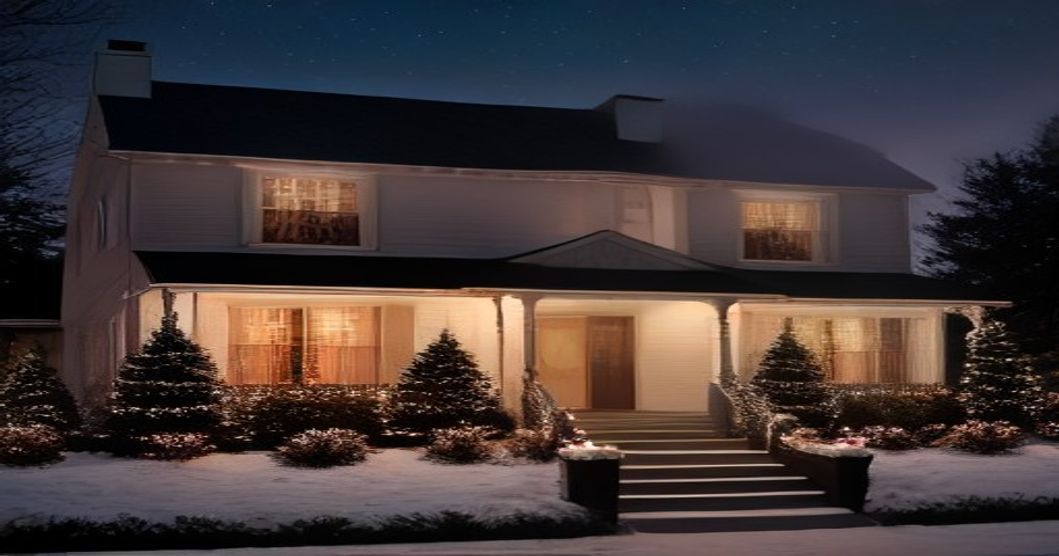
Warm white C9s produce a golden, candlelit glow that reads as timeless and welcoming. They photograph beautifully against brick, cedar shake, and painted wood siding. In New England states like Vermont and New Hampshire, where colonial and cape-cod architecture dominates, warm white is by far the most requested color because it echoes the amber light of lanterns and hearths. If you want your home to look like the cover of a holiday magazine without being showy, warm white is your answer. For a deeper dive into why color temperature changes everything, see our article on color temperature science for holiday lighting.
Cool White (5000K, 6500K)
Cool white C9s skew toward crisp daylight tones, think fresh snow and winter moonlight. They pair beautifully with modern or contemporary architecture: clean fascia lines, flat roofs, and homes with gray or white exterior palettes. Commercial properties, particularly retail storefronts, often favor cool white because it reads as sharp and high-contrast on signage photography. Our team has used cool-white C9s extensively on boardwalk businesses and mid-century homes from Maryland to Connecticut. Learn how cool-white tones perform in warmer climates in our guide to cool-white mini lights for South Jersey patios, the same principles apply year-round.
Classic Multicolor
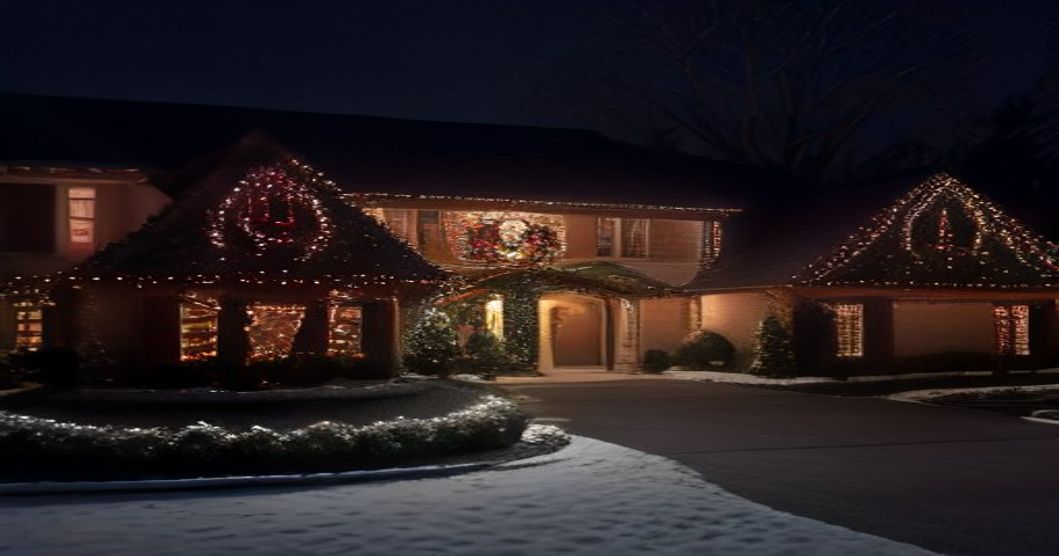
Multicolor C9 strings cycle through red, green, orange, blue, and yellow in a repeating pattern. This is the nostalgic look, the one that feels like 1965, like your grandparents' house, like a Norman Rockwell neighborhood. Multicolor works best on asymmetrical rooflines with lots of visual texture: dormers, gable peaks, wrap-around porches, and turrets. It requires more planning than single-color runs because the color sequence should feel intentional at the corners and peaks, not random. If multicolor is your target, budget extra time for the layout conversation. The psychology of red and green holiday colors is fascinating context for why this palette triggers such powerful nostalgia.
Single-Color Bold: Red and Green
Running all-red or all-green C9s is a high-commitment choice that pays off on the right canvas. All-red rooflines on white colonial homes create a stunning graphic contrast, think candy-cane boldness without the stripes. All-green works surprisingly well on brick buildings and on commercial facades where a brand color alignment matters. Single-color bold displays are increasingly popular for commercial holiday lighting because they can be coordinated with a brand's palette or a downtown district's unified theme. Municipal installations across our network, from small-town Main Streets in Delaware to historic districts in Massachusetts, often standardize on single-color C9s for visual cohesion.
Quick Color-Selection Reference
| Color | Best Architecture Match | Mood / Feel | Photogenic Against |
|---|---|---|---|
| Warm White | Colonial, Cape Cod, Craftsman | Timeless, cozy, elegant | Brick, cedar, painted wood |
| Cool White | Modern, Contemporary, Commercial | Crisp, frosty, high-contrast | Gray, white, metal panels |
| Multicolor | Victorian, Asymmetrical, Cottage | Nostalgic, festive, playful | Any, depends on contrast |
| All Red | White Colonial, Federal | Bold, graphic, striking | White siding, snow backdrop |
| All Green | Brick Commercial, Tudor | Rich, traditional, brand-aligned | Tan, buff, cream exteriors |
Spacing Formulas: The Math Behind a Flawless Roofline
Spacing is the single variable that separates a professional-looking C9 roofline from a DIY attempt that looks stretched thin or bunched at the peaks. There are two standard intervals in the industry: 12-inch and 18-inch. Neither is universally superior, the right choice depends on roofline length, architectural detail, and the density of glow you're targeting.
12-Inch Spacing: Dense, Dramatic, Traditional
At 12-inch intervals, C9 bulbs appear closely linked, creating a nearly unbroken ribbon of light. On a standard 40-foot front roofline, 12-inch spacing requires approximately 41 bulbs (one per linear foot, plus one for the terminal socket). This density reads as intentional and grand, ideal for homes with shorter rooflines (under 60 feet total), homes entering neighborhood lighting competitions, and any property where the roofline is the primary, or only, decorative element on the façade. It's also the spacing we recommend when homeowners add complementary garlands, wreaths, or bows to columns and doorways; the roofline needs to hold its own against all that additional material.
18-Inch Spacing: Rhythmic, Elegant, Architectural
At 18-inch intervals, each C9 bulb has breathing room, and the eye travels between them in a gentle pulse. On a 60-foot roofline, 18-inch spacing requires roughly 41 bulbs, the same count as 12-inch spacing on a 40-foot run. This is the formula for long Victorian rooflines, sprawling ranch homes with 80–120 linear feet of fascia, and multi-unit commercial properties where you need coverage without overwhelming visual noise. Eighteen-inch spacing also reads more elegantly during daylight hours when bulbs on a clip are visible from the street even before sunset. It's our default recommendation for commercial storefronts with extended façade widths.
Spacing Quick-Reference Formula
- Measure total linear roofline footage (all ridges, rakes, and eaves you plan to outline).
- Divide by your chosen interval (1.0 for 12-inch; 1.5 for 18-inch).
- Add 1 bulb per terminal end.
- Add a 10% buffer for architectural irregularities (dormers, valleys, peaks).
- Round up to the nearest full string count.
Example: A two-story home with 95 linear feet of roofline at 18-inch spacing needs approximately 64 bulbs plus a 10% buffer, call it 70 bulbs, or seven 10-socket commercial strings.
Corners and Peak Transitions
The corners where eave meets rake, and especially the peak of a gable, require extra attention regardless of spacing interval. A professional installer will add a half-spacing bulb at each inside and outside corner so the light density doesn't suddenly jump or thin at those transitions. On multicolor strings, corner placement also affects where each color lands on the visual focal points of the home. This is detail-level thinking that DIY installation guides rarely address and that Holiday Lights Decor's trained crews handle as standard practice on every residential installation.
Professional-Grade LED C9s vs. Big-Box Store Strings
Not all C9 bulbs are built the same, and the gap between professional-grade LED C9s and the strings stacked on big-box store shelves in October is significant enough to affect how your display looks, performs, and costs over time.
- Lifespan: Professional LED C9s are rated for 50,000+ hours. Big-box incandescent C9s average 1,000–3,000 hours, meaning a display run 8 hours per night burns through a consumer bulb in roughly four to twelve seasons if nothing breaks first.
- Lumen consistency: Commercial-grade LEDs hold their rated brightness across the entire string. Consumer strings often dim noticeably toward the end of the run due to voltage drop in lighter-gauge wire.
- Color uniformity: Warm white LEDs from professional suppliers are binned to within a tight Kelvin range (e.g., 2700K ± 100K). Big-box warm-white strings can vary by 500K or more between strings purchased in the same trip, making rooflines look patchwork.
- Wire gauge and weather resistance: Professional C9 strings use 18- or 16-gauge SPT wire rated for outdoor use in temperatures from -40°F to 140°F, critical for properties from the snowbelt of northern Maine to the humid coastal heat of Florida.
- Replaceability: Individual E17 LED C9 bulbs in a professional system are swappable without discarding the entire string. Consumer all-in-one strings often require full replacement when a segment fails.
The long-term cost math typically favors professional-grade LEDs within two to three seasons even before factoring in labor savings. See our detailed breakdown in the Christmas light installation cost guide for a full comparison of ownership costs.
Roofline Design Strategies for Different Home Styles
A roofline isn't just a straight line, it's an architectural portrait, and C9 placement should respond to its specific geometry.
Ranch and Split-Level Homes
Long, low rooflines benefit from 18-inch spacing and a single consistent color (warm white or cool white) to avoid visual busyness. Adding C9s along the garage roofline at the same interval anchors the full width of the façade. Ranch homes in states like Connecticut and New Jersey, where mid-century modern design is common, look especially polished with cool-white C9s that echo the home's clean horizontal lines.
Two-Story Colonials and Federals
These homes have strong vertical symmetry. C9s along both the upper and lower rooflines at 12-inch spacing create a layered, grand effect. Warm white is the classic choice, but all-red on a white colonial generates genuine visual drama. Window accent lighting or garland on second-floor shutters should be planned in coordination with roofline color, mixed color temperatures between the roofline and window accents is one of the most common mistakes we correct during professional consultations.
Victorian and Queen Anne Homes
The complex rooflines of Victorian architecture, multiple gable peaks, decorative bargeboard, wraparound porches, turrets, were practically designed for multicolor C9s. The varied roofline geometry gives each color in the sequence a natural landing spot. Eighteen-inch spacing prevents visual overload on what is already a visually busy façade. The Victorian origins of American Christmas decorating make this pairing feel historically resonant, not just aesthetically sound.
Commercial Façades
Retail storefronts, restaurants, and office buildings typically have long, flat parapet rooflines or canopy edges where C9s create a marquee effect. Cool white at 18-inch spacing is the most versatile choice for commercial use because it photographs crisply for social media and doesn't clash with branded signage colors. For businesses booking early, our August early-bird installation booking benefits article explains why scheduling by midsummer locks in priority crew access across our entire service network.
Booking Your C9 Roofline Installation: What to Expect
Holiday Lights Decor operates across twelve states, from Maine and Vermont through the mid-Atlantic corridor and down to Florida, with franchise teams trained to handle the full spectrum of residential and commercial roofline complexity. Our installation process begins with a property walkthrough (in person or via our remote measurement tool), during which a design specialist measures linear roofline footage, identifies anchor points, evaluates power source locations, and recommends the optimal C9 color and spacing combination for your architecture and neighborhood context.
Once installed, our systems are covered through the display season with on-call service visits included. At season's end, our professional removal and storage service takes down, tests, and warehouses your C9 strings in climate-controlled conditions so they arrive next November in exactly the same condition they left your roofline. For homeowners considering a more permanent solution, our permanent lighting systems use architectural-grade C9-style nodes installed once and activated each season via app, an increasingly popular option for properties that want roofline drama without annual installation logistics.
The best displays are planned well ahead of the fall rush. Our guide on when to book Christmas light installation walks through the ideal timeline by region so you're not scrambling in November when crews are already fully committed.
Frequently Asked Questions
What is the standard spacing for C9 bulbs on a roofline?
The two most common C9 roofline spacing standards are 12 inches and 18 inches. Twelve-inch spacing creates a dense, dramatic look ideal for shorter rooflines (under 60 linear feet) and competition-worthy displays. Eighteen-inch spacing produces a more rhythmic, elegant effect suited to long rooflines, Victorian architecture, and commercial façades. To calculate the number of bulbs needed, divide total roofline footage by your interval in feet, add one bulb per terminal end, and build in a 10% buffer for corners and peaks.
What C9 bulb color looks best on a brick home?
Warm white C9s (2700K, 3000K) are the most flattering choice for red or buff brick exteriors because the golden tone complements rather than fights the warm undertones of the masonry. All-green C9s are a bold alternative that creates rich contrast against brick and reads as traditional and brand-aligned for commercial brick buildings. Cool white tends to wash out against warm brick tones and is better reserved for gray, white, or metal-panel exteriors.
How long do professional LED C9 bulbs last compared to store-bought strings?
Professional-grade LED C9 bulbs are rated for 50,000+ hours of operation, compared to 1,000–3,000 hours for standard incandescent C9 bulbs sold in retail stores. At 8 hours of nightly use during a 45-day holiday season (360 hours per year), a professional LED C9 can last well over 100 seasons. Consumer incandescent bulbs may last only 3–8 seasons under the same conditions, and their brightness and color consistency degrade significantly before they fail outright.
Can C9 bulbs be used for non-Christmas displays like Fourth of July lighting?
Absolutely. C9 bulbs in red, white (warm or cool), and blue are a natural fit for patriotic holiday displays, particularly along rooflines, porches, and fence lines. Because professional C9 strings use individual E17 socket bases, color swapping between seasons is straightforward, the same wire infrastructure carries different bulb colors for different occasions. Our guide on red, white, and blue C9 displays for Fourth of July covers patriotic layout strategies in detail.
How many C9 bulbs do I need for a 50-foot roofline?
For a 50-foot roofline at 12-inch spacing, you need approximately 51 bulbs (50 intervals plus one terminal). At 18-inch spacing, you need approximately 35 bulbs (33 intervals plus one terminal, rounded to the nearest full string). Always add a 10% buffer, so plan for 56 bulbs at 12-inch spacing or 39 bulbs at 18-inch spacing, to account for corner placements, gable peaks, and architectural transitions that require adjusted intervals.
Does Holiday Lights Decor serve my state?
Holiday Lights Decor is a nationwide franchise network currently serving Maine, Vermont, New Hampshire, Massachusetts, Rhode Island, Connecticut, New York, New Jersey, Pennsylvania, Delaware, Maryland, and Florida. Whether you're in a rural New England town or a Florida coastal community, our trained crews handle residential rooflines, commercial façades, tree lighting, garland installation, and season-end removal and storage. Visit our full services page or request a free estimate to connect with the crew closest to your property.
Ready to transform your roofline with the perfect C9 color and spacing combination? Contact Holiday Lights Decor today for a free design estimate, our specialists across the network are ready to measure your property, recommend the right bulb system, and handle every step from installation through storage so your display looks flawless from Thanksgiving through New Year's.