Key Takeaways
- Professional holiday lighting crews fill calendars 3–5 months in advance; June bookings lock in dates before the September, October surge erases availability.
- Pre-season pricing is available in June, demand-driven rate increases typically kick in after Labor Day in most Northeast and Mid-Atlantic markets.
- A summer walkthrough gives designers time to assess rooflines, power supply, gutter guard compatibility, and landscaping without a ticking deadline.
- Late November installation slots, the most requested window, disappear by August in high-demand states like Connecticut, New Jersey, Maryland, and Massachusetts.
- Custom product orders (specialty C9 colors, commercial-grade LED mini lights, custom garland runs) require 8–12 weeks of lead time; June consultation makes that easy.
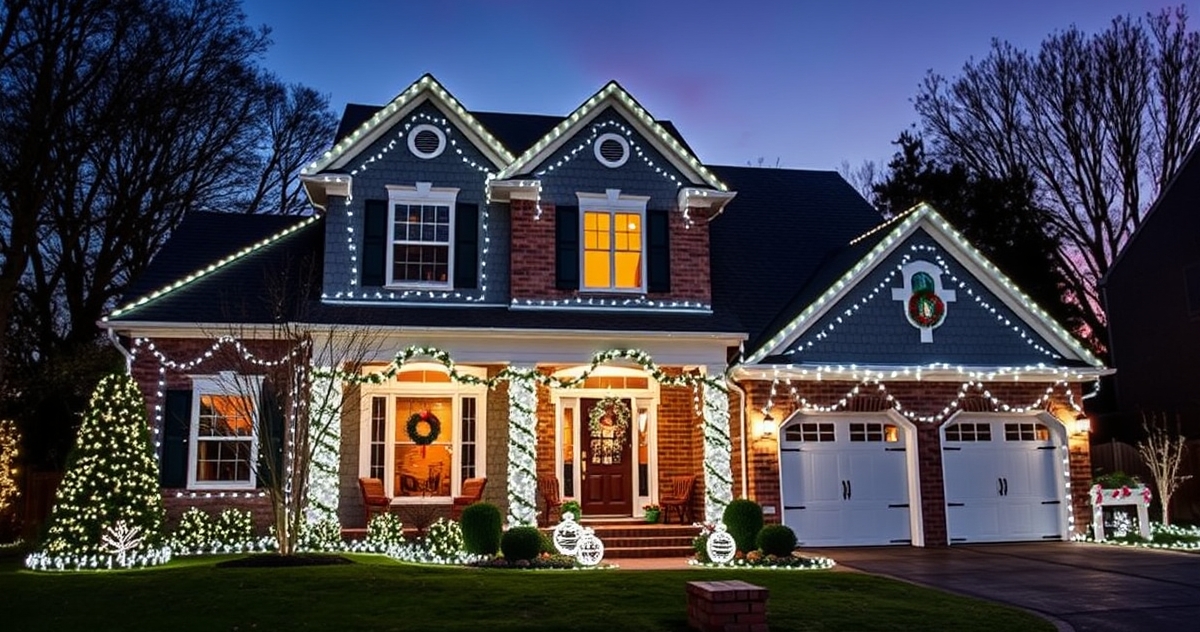
Every December, thousands of homeowners and business owners across the country watch professional lighting crews transform the house next door into a breathtaking warm-white roofline with perfectly spaced C9 bulbs, draped garland, and illuminated trees, and wonder how their neighbor managed to get on the schedule. The answer is almost always the same: they called in June. While most people are thinking about summer barbecues and beach trips, the savviest holiday decorating clients are signing contracts, choosing light colors, and reserving their preferred November installation window. The difference between a spectacular, stress-free holiday display and a frantic October scramble is almost entirely a scheduling decision, and June is precisely when that decision pays off.
How Far in Advance Do Holiday Lighting Crews Actually Book?
Professional holiday lighting installation crews in major metro markets book out an average of 3–5 months before the start of the installation season, which typically runs from late October through early December. That means demand peaks in August and September, but the savviest clients are already locking in dates in June and early July.
This isn't anecdotal. Across the Holiday Lights Decor franchise network, serving homeowners and businesses from Maine and Vermont down through Massachusetts, Connecticut, New York, New Jersey, Pennsylvania, Maryland, and Florida, installation calendars in high-density suburbs start filling by mid-summer. States like Connecticut, New Jersey, and Maryland, with their dense mix of residential neighborhoods and commercial corridors, see waitlists form as early as late July. By August, the most desirable late-November slots are often entirely gone.
Why does demand concentrate so heavily? Three reasons:
- Everyone wants the same week. The window between Thanksgiving and the first week of December is the single most requested installation period. Supply of skilled crews cannot expand overnight to meet that spike.
- Commercial clients book early. Retail centers, office parks, and municipal clients, many served through our commercial lighting services, sign contracts in spring and summer, claiming prime crew time before residential clients even start thinking about the holidays.
- Custom installations take longer. A home with 200 linear feet of roofline, mature specimen trees, and custom garland on a multi-level deck requires multiple site visits, specialty product orders, and careful crew scheduling, none of which can be compressed into a two-week window.
The Real Financial Reason to Book in June
Booking your holiday lighting installation in June typically saves homeowners and businesses 10–20% compared to booking in September or October, because pre-season pricing hasn't yet adjusted for peak-demand surcharges.
Here's how the pricing curve actually works. Most professional holiday lighting companies, including our network, offer their most competitive rates during the off-season, when crews have scheduling flexibility and material costs haven't been inflated by rush ordering. As fall approaches and calendar slots shrink, the economics shift: fewer open dates mean less competitive pressure to discount, and last-minute product sourcing adds real cost.
The June sweet spot also gives you access to:
- Multi-year contract discounts, locking in a second or third season at the same time earns meaningful savings across the franchise network.
- Early-bird design packages, some markets offer complimentary design consultations or upgraded products (like commercial-grade LED mini lights in place of standard residential strings) for clients who book before a specific summer cutoff date.
- Budget planning flexibility, a June booking gives you four to five months to budget, finance, or phase a larger project. Our holiday lighting budget planning guide walks through exactly how to structure that process.
For businesses especially, the financial argument is straightforward: a commercial property that books in June can negotiate scope, add permanent lighting installations alongside seasonal decor, and spread costs across fiscal quarters in a planned way, rather than scrambling to approve emergency invoices in November.
What a June Walkthrough Actually Accomplishes
A summer design consultation accomplishes far more than scheduling, it gives your lighting designer the time and conditions to make structural, aesthetic, and technical decisions that are simply impossible to make well in October.
During a June or July site walkthrough, a Holiday Lights Decor designer will evaluate:
Roofline and Architectural Assessment
Roofline lighting, whether classic C9 bulbs on custom spacing clips or LED mini light outlines, requires careful measurement and clip selection that accounts for gutter style, gutter guard systems, fascia material, and roof pitch. Gutter guard compatibility is a surprisingly common friction point: some guard types require specialized no-damage clips that must be ordered weeks in advance. Discovering this in late October, after standard clips have already been installed incorrectly, means redoing work under deadline pressure.
Landscaping and Tree Condition
Trees change dramatically between summer and December. A June walkthrough lets designers assess which trees are candidates for professional tree lighting, how much growth has occurred since last season, and whether any structural pruning is needed before lights go on. Wrapping a large oak or Norway spruce with warm-white LED mini lights on a custom schedule requires knowing branch spread, height, and access, information that's best gathered when foliage is full and the tree is visible from the street.
Power Supply and Circuit Planning
This is the detail most homeowners never think about until extension cords are already strung. A professional assessment maps your home's exterior outlet locations, calculates total wattage draw for the planned display, and identifies whether a dedicated circuit, GFCI outlet upgrade, or additional exterior outlet installation is needed. Electrical work requires a licensed contractor and scheduling lead time, neither of which is available in a November emergency. Commercial-grade LED mini lights draw dramatically less power than incandescent strings (roughly 75–80% less per strand), but a large display with hundreds of C9 bulbs, multiple tree wraps, and roofline runs can still exceed a single 15-amp circuit's safe load. June is when you find out, and fix it.
Design Concept and Color Direction
Should your roofline run in classic warm white (2700K, 3000K color temperature) or crisp cool white (5000K, 6000K)? Is multicolor the right choice for a family with young children, or does it conflict with the home's architectural palette? These are questions that benefit from unhurried conversation, and from seeing the home in natural summer light. Our color temperature science guide explains the perceptual differences in detail, but the real-world decision is easier when a designer can hold warm-white and cool-white samples against your actual siding, brick, or stone in daylight.
The Slot Scarcity Reality: When Your Preferred Date Actually Disappears
Late November installation slots, the week of November 18–25, are the first to fill every single year across every market in the Holiday Lights Decor network. In dense suburban markets like Morris County and Bergen County in New Jersey, Boston's North Shore, suburban Connecticut, and the Maryland suburbs of Washington, D.C., those slots are typically fully booked by August 1.
Here's a realistic timeline of how availability shrinks:
| Booking Month | Typical Availability | Pricing |
|---|---|---|
| June | All slots open, including late November | Best pre-season rates |
| July | Late November filling fast; most dates still open | Pre-season rates still available |
| August | Late November gone in high-demand markets; early December open | Standard rates begin |
| September | First two weeks of November filling; mid-December available | Peak-season rates in effect |
| October | Limited availability; significant scheduling constraints | Peak rates + possible rush fees |
| November | Waitlist only; crews fully committed | Waitlist or emergency premium |
The pattern is consistent whether you're in a coastal New England market or a Mid-Atlantic suburb. The practical takeaway: if you have a specific date in mind, say, the Saturday before Thanksgiving, so your lights are on for the neighborhood walk, that date requires a June booking. Waiting until fall is waiting to be disappointed.
For businesses managing commercial holiday lighting for retail storefronts, restaurants, or office campuses, the stakes are even higher. A retail center that goes dark while competitors glow risks real foot traffic consequences during the highest-spending weeks of the year. Read more about how commercial lighting drives customer engagement year-round.
Custom Products Need Lead Time You Don't Have in October
Specialty holiday lighting products, custom-length garland runs, commercial-grade warm-white C9 strings on specific spacing, heavy-duty outdoor extension cords rated for cold-weather flexibility, and roofline clips engineered for non-standard gutter profiles, routinely require 8–12 weeks from order to delivery. June is the only month that makes that timeline comfortable.
C9 Bulbs and Roofline Clips
C9 bulbs in specialty colors like amber, gold, or tinted warm white, as well as retrofit LED C9 bases on custom 12-inch or 18-inch spacing, are manufactured-to-order items at commercial quantities. The complete C9 guide explains spacing and color selection in depth. Roofline clips, including all-in-one shingle tabs, gutter clips, and the specialized no-damage clips for gutter guard systems, are similarly stocked in standard sizes but need advance ordering for non-standard rooflines. A June consultation means your custom clip order ships in July and arrives well before the October installation season begins.
LED Mini Lights and Extension Cords
Commercial-grade LED mini lights, especially in warm white or multicolor with specific bulb counts per strand (50-count, 100-count, 200-count), and heavy-duty 16-gauge outdoor extension cords in brown or green, the ones that actually blend into landscaping and stay flexible at 20°F, are high-demand items that sell out at wholesale distributors by September. Booking in June means your installer can confirm product availability, place bulk orders at pre-season pricing, and store everything properly until installation day. The versatility of LED mini lights beyond standard Christmas applications is also worth exploring if you're considering year-round accent lighting.
Garland, Wreaths, and Decorative Elements
Custom-length commercial garland, the thick, realistic kind used on staircases, mantels, and exterior railings, is ordered by the foot from specialty manufacturers. Standard 9-foot sections are always available, but a 40-foot continuous staircase run or a custom 60-foot exterior railing treatment requires a factory order. The same applies to oversized wreaths for commercial entries or specialty bow configurations. Our guides on garland styling techniques and wreath decoration with light integration show what's possible when products are ordered correctly in advance.
How to Actually Lock In Your Date: A Step-by-Step Guide
Locking in your holiday lighting installation date in June is a straightforward process, here's exactly how it works with the Holiday Lights Decor network.
- Request your free estimate in June. Visit our contact page to schedule your complimentary consultation. A local designer from your regional franchise territory will reach out within 48 hours to schedule a site walkthrough.
- Complete your summer walkthrough. A designer visits your property, usually a 45–60 minute appointment, to assess rooflines, trees, power supply, and design goals. Bring any inspiration photos, discuss preferred light colors (warm white, cool white, or multicolor), and ask questions without any pressure.
- Review your custom design proposal. Within a week of your walkthrough, you'll receive a detailed proposal including product specifications (C9 bulb type and spacing, LED mini light strand counts, extension cord requirements, clip type, garland and wreath dimensions), installation date options, and total investment.
- Sign and deposit to reserve your date. A signed agreement with a deposit, typically 25–50% depending on the market, officially holds your installation slot. This is the step that makes your date real.
- Product ordering begins immediately. Your designer places all specialty product orders in July, ensuring everything arrives and is checked before your installation window opens.
- Confirm final details in October. About four weeks before your installation date, your crew lead will confirm the schedule, review any changes (new landscaping, added features, or color adjustments), and confirm access logistics.
The entire process, from first contact to confirmed date, takes about two weeks in June. In October, the same process can take two weeks just to find an open slot.
If you're curious about what a full professional design consultation looks like in practice, our design consultation planning guide covers the process in detail. And if you're planning to add removal and storage service to your booking, which most clients do, learn about our removal and storage services that take every post-holiday task off your plate.
Frequently Asked Questions
When is the best time to book holiday lighting installation?
June is the best time to book holiday lighting installation. Professional crews across major U.S. metro markets, particularly in the Northeast and Mid-Atlantic, book out 3–5 months in advance, and the most desirable late-November installation slots fill by August in high-demand markets. Booking in June secures your preferred date at pre-season pricing before fall rate increases take effect.
How far in advance do professional holiday lighting crews book up?
In most major metro markets, professional holiday lighting installation crews book 3–5 months in advance of the installation season. In dense suburban markets, such as northern New Jersey, suburban Connecticut, and Maryland's D.C. suburbs, waitlists for late November slots form as early as late July. Commercial clients often book even earlier, sometimes in spring, which further reduces residential availability by summer.
Does booking early save money on holiday lighting installation?
Yes. Pre-season pricing, typically available through August, is 10–20% lower than peak-season rates in most markets. Booking in June also avoids rush fees, last-minute product sourcing surcharges, and the limited negotiating leverage that comes with booking when few slots remain. Multi-year contracts signed in the off-season often include additional discounts not available after Labor Day.
What happens during a summer holiday lighting consultation?
A summer holiday lighting consultation typically includes a 45–60 minute on-site walkthrough where a professional designer assesses your rooflines, gutter and clip compatibility, exterior outlet locations and circuit capacity, tree and landscaping conditions, and architectural features. The designer presents light color options (warm white, cool white, multicolor), discusses product preferences like C9 bulbs or LED mini lights, and gathers the information needed to produce a custom design proposal and accurate installation estimate.
What products should I discuss at my June holiday lighting consultation?
Key products to discuss at a June consultation include C9 bulb type and spacing for roofline runs, LED mini light strand counts for tree wraps and shrub lighting, roofline clip compatibility with your gutter system (including gutter guard-specific clips), heavy-duty outdoor extension cords rated for cold-weather use, and decorative elements like custom garland lengths and wreaths. Specialty items in these categories require 8–12 weeks of lead time, making a June booking essential for custom configurations.
Which states and regions book out the fastest for holiday lighting?
Within the Holiday Lights Decor franchise network, the fastest-filling markets are in the Northeast and Mid-Atlantic: Connecticut, Massachusetts, New Jersey, New York (suburban markets), Maryland, and Pennsylvania metro areas consistently see waitlists form by July, August. Dense suburban neighborhoods with high rates of professional service adoption, such as Morris County and Bergen County in New Jersey, and the Hartford and Fairfield County suburbs in Connecticut, are particularly competitive for late November installation slots.