Key Takeaways
- A home's architectural era, historic or modern, is the most reliable guide to choosing the right lighting style, color temperature, and fixture scale.
- Historic neighborhoods naturally favor classic multicolor C9 bulbs and warm incandescent tones that complement aged materials and complex rooflines.
- Contemporary builds and newer subdivisions showcase warm white LED installations, smart controls, and coordinated neighborhood themes to best effect.
- Community culture, HOA guidelines, and municipal light-tour traditions all shape what "fits in", and what stands out in the wrong way.
- Professional installation by your local Holiday Lights Decor team bridges the gap between personal vision and neighborhood context, safely and beautifully.
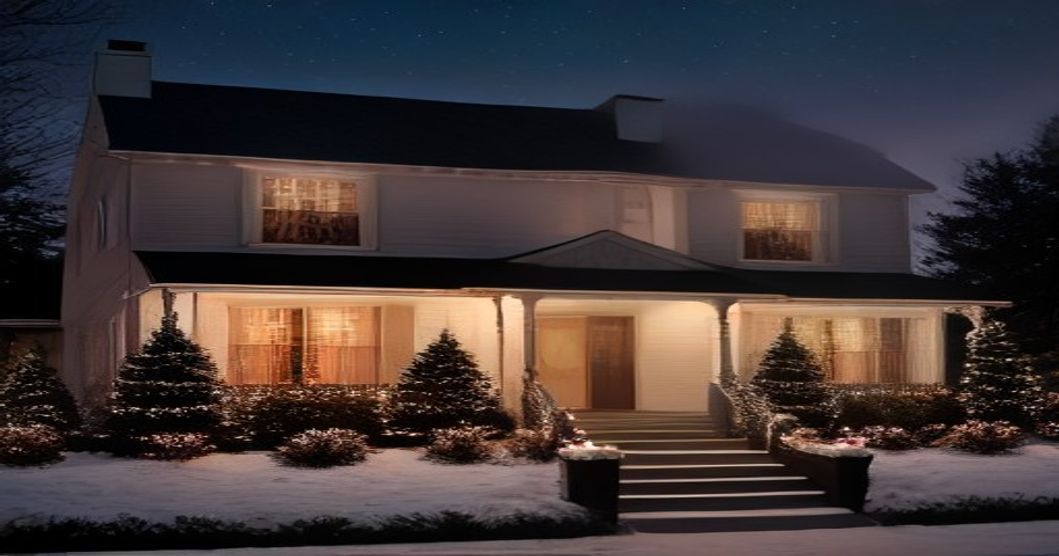
Drive through a historic district in December, colonial rooflines outlined in multicolor C9 bulbs, candles glowing in multi-pane windows, evergreen garlands tied with traditional red bows, and then turn into a newer subdivision where warm white LED displays illuminate stone columns and soaring entry facades in sleek, contemporary fashion. Two neighborhoods, a few miles apart, two completely different holiday aesthetics. Neither is wrong. Both are exactly right for their setting.
This dynamic plays out in communities across the United States. Historic towns and modern developments approach Christmas lighting from entirely different starting points, and understanding those differences is essential knowledge for homeowners planning their own displays, professionals designing installations, and anyone who appreciates how local tradition shapes our seasonal celebrations.
Historic Neighborhoods: Preserving Classic Christmas Traditions
In established communities with 18th-, 19th-, and early 20th-century housing stock, Christmas lighting traditions run as deep as the architecture itself. Homeowners in these areas take genuine pride in holiday displays that honor their homes' heritage, and the neighborhood expects it.
The preference leans heavily toward multicolor C9 bulbs along rooflines, the large, classic Christmas lights that have defined American holiday decorating since the 1940s. These vintage-style fixtures complement colonial, Victorian, and Craftsman architecture perfectly. You'll find fewer elaborate animated light shows and more emphasis on tasteful, traditional arrangements that enhance rather than overwhelm intricate architectural details.
Many historic districts across the country have formal or informal guidelines encouraging lighting that "complements the architectural character of historic structures." Downtown business associations in heritage communities often coordinate annual holiday lighting tours that celebrate classic displays and set the aesthetic tone for residential streets nearby.
Mature landscaping also shapes the choice. Rather than competing with century-old oaks and maples, homeowners in established neighborhoods often choose subtle mini-light wraps that highlight existing trees and foundation plantings. The result is a cohesive street view where every home contributes to a shared traditional atmosphere.
What Works on Historic Architecture
- Multicolor C9 or C7 bulbs along rooflines and dormers, the scale matches complex historic profiles
- Warm white mini lights woven through mature hedges, boxwoods, and established foundation plantings
- Candle-style window lights in multi-pane windows, period-appropriate and quietly elegant
- Incandescent or warm-spectrum LED equivalents that complement aged brick, weathered cedar, and natural stone
- Restrained use of animated elements, motion and color-chasing effects rarely suit historic contexts
Modern Homes and Newer Subdivisions: The Contemporary Lighting Evolution
Newer construction tells a different story entirely. Contemporary homes, modern colonial reproductions, craftsman-inspired builds, Mediterranean-influenced designs, and clean-lined new construction, feature larger surface areas, expansive rooflines, and architectural focal points that positively invite bold, uniform LED displays.
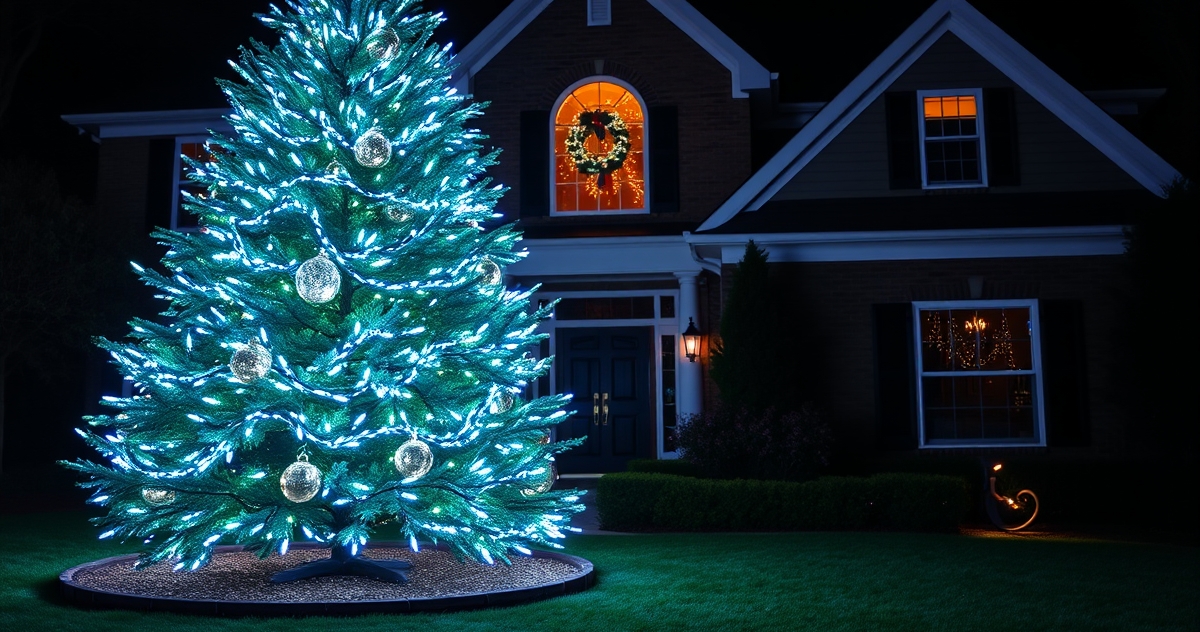
The dominant preference in these communities is warm white LED installations that create sophisticated, cohesive appearances across entire streetscapes. These displays frequently incorporate smart lighting controls, synchronized sequences, and architectural emphasis lighting that highlights features like stone columns, arched entryways, dramatic gable ends, and oversized windows.
Newer subdivisions also embrace community-wide coordination. It's common to find neighborhoods where residents align on color palettes and installation schedules, organically creating driving tours that rival commercial holiday attractions. Homeowners associations in many of these developments actively encourage the practice, sometimes sponsoring competitions for "Most Creative Display" or "Best Use of Technology."
Municipal involvement follows suit: newer communities often sponsor elaborate downtown displays and holiday lighting competitions that reward innovation alongside tradition. Your Holiday Lights Decor municipal services team works with towns and townships nationwide to design these kinds of landmark installations.
What Works on Contemporary Architecture
- Warm white LED roofline and fascia lighting, crisp, uniform, and energy-efficient
- Architectural emphasis lighting on columns, arches, stone facades, and large window surrounds
- Smart lighting controls for scheduling, dimming, and color-temperature adjustment
- Coordinated color themes that tie into a neighborhood's collective display
- Synchronized music or animated sequences, more appropriate here than in historic contexts
Architecture Is the Real Driver: A Side-by-Side Comparison
The most reliable way to choose your holiday display approach is to start with your home's bones. Here's how architectural era translates into lighting decisions:
| Factor | Historic / Established Home | Modern / Contemporary Home |
|---|---|---|
| Preferred bulb type | Multicolor C9 / C7, warm incandescent | Warm white LED, color-selectable LED |
| Roofline treatment | Classic outline lighting following complex profiles | Clean linear runs on long, straight fascia |
| Landscape lighting | Subtle wraps on mature trees and hedges | Bold uplighting, statement tree wraps |
| Animated / smart elements | Rarely appropriate | Commonly embraced |
| Community expectation | Cohesion, historical continuity | Creativity, competitive spirit |
| Professional install rate | Moderate, precision matters on complex rooflines | High, scale and smart systems reward expertise |
Municipal Light Tours: How Communities Celebrate Their Unique Style
Organized holiday light tours are one of the clearest windows into a community's lighting identity. Across the country, historic districts tend to produce tours that emphasize storytelling and traditional charm, while newer communities focus on scale, spectacle, and technological innovation.
In heritage towns, tours often pass through neighborhoods where the National or State Historic Register designation sets the cultural tone. Period-appropriate lighting on 18th- and 19th-century structures, complemented by coordinated residential displays on adjacent streets, creates an immersive seasonal atmosphere that transports visitors. Restrained elegance is the operating principle: warm C9 outlines, evergreen garlands, candle-window displays.
In newer communities, tours become genuine competitive events. Homeowners vie for recognition in categories like "Most Creative Use of Technology" or "Best Coordinated Street Display." Color-changing LEDs, music synchronization, animated projection elements, and smart-home integration all come into play. These displays would feel out of place in a historic district, but in their proper context, they're spectacular.
Commercial corridors reflect the same split. Historic downtowns maintain tasteful traditional lighting designed to complement preserved storefronts and architecture. Modern retail and business districts deploy elaborate displays engineered to draw foot traffic and social media attention. Our commercial holiday lighting team designs for both contexts nationwide.
Community Culture and Social Influences
Beyond architecture and municipal policy, neighborhood culture shapes Christmas lighting choices in ways that are harder to quantify but impossible to ignore. Established neighborhoods tend to prioritize cohesion and continuity, there's often an unspoken agreement about appropriate decoration levels, and new homeowners quickly pick up on the prevailing aesthetic. The result is remarkably consistent street views that feel settled and intentional.
Newer communities operate differently. Many developments were built by people who moved from varied backgrounds and don't share a decades-long decorating tradition. That freedom breeds creativity. HOAs in these neighborhoods frequently formalize the spirit of competition with organized contests, designated installation weekends, and coordinated color themes, turning the whole subdivision into a single cohesive display that becomes a regional destination.
Professional installation rates reflect these differences. In historic neighborhoods, complexity is concentrated in precision: fitting classic lighting to intricate rooflines and mature landscapes without a single clip out of place. In newer communities, complexity comes from scale and technology: large homes, smart systems, and coordinated neighborhood installs that require project management as much as electrical expertise. Either way, the right professional partner makes the difference between a display that fits perfectly and one that sticks out.
Our residential holiday lighting services are tailored to both contexts, with local Holiday Lights Decor franchise teams who know their communities and their architecture.
Planning Your Holiday Display: A Practical Framework
Whether your home dates to the 1880s or was built last year, the same planning framework applies. Work through these considerations before purchasing a single strand of lights:
- Assess your architecture. What era is your home? What are its dominant materials, brick, cedar, stucco, stone, Hardie board? Complex roofline or clean lines? The answers drive bulb scale and color temperature decisions.
- Survey your street. Walk or drive your neighborhood in late November. What do neighboring displays look like? Are there dominant color palettes or lighting styles? Coordinating with your surroundings produces a more satisfying result than competing with them.
- Check HOA and local guidelines. Many communities have rules about installation dates, removal deadlines, acceptable decoration types, and light intensity. Your local Holiday Lights Decor team knows local requirements and can help you stay compliant.
- Consider your landscape. Mature trees and established plantings in older neighborhoods require a gentler touch. Younger landscapes in newer developments offer more flexibility for bold statement lighting.
- Set a realistic budget and maintenance plan. Professional installation, quality materials, and post-season removal and storage represent an investment, but they also eliminate the risk, ladder work, and storage headaches of DIY. Factor in the full-season cost, not just upfront materials.
When to Call a Professional
The honest answer is: for most homeowners, the answer is always. Roofline work involves ladders, heights, and electrical connections. Getting C9 runs perfectly straight on a complex Victorian roofline requires experience. Designing a warm white LED system for a large contemporary home, with smart controls, synchronized sequences, and architectural emphasis lighting, requires both electrical expertise and design sensibility.
Holiday Lights Decor franchise teams across the country bring both. We design custom displays matched to your home's architecture, install with commercial-grade materials and professional-grade precision, and handle all takedown and storage at season's end. For communities with coordinated neighborhood installs, we manage the project from start to finish. Explore the full range of what we offer at our services overview.
Ready to plan your perfect holiday display, whether you're preserving a historic neighborhood's classic character or pushing the creative boundaries of a modern subdivision? Contact your local Holiday Lights Decor team for a free consultation. We'll help you create a display that honors your home, fits your community, and makes your street the one everyone drives down.
Frequently Asked Questions
What type of Christmas lights work best for historic homes?
Multicolor C9 or C7 bulbs are the classic choice for historic architecture, their scale and warm glow complement colonial, Victorian, and Craftsman rooflines and aged materials like brick, cedar, and natural stone. Warm white mini lights work well for accent lighting on mature foundation plantings and established landscapes. Avoid overly bright or animated elements, which tend to clash with the restrained elegance historic neighborhoods favor.
Do HOAs and municipalities restrict Christmas light displays?
Requirements vary widely across the country. Historic district guidelines may specify lighting that "complements the architectural character" of the area, while many newer-development HOAs actively encourage elaborate displays and even organize neighborhood competitions. Most municipalities have rules around installation and removal dates and may restrict light intensity near traffic signals. Your local Holiday Lights Decor franchise team knows the requirements in your area and designs installations that stay fully compliant.
How do I choose between warm white and multicolor lights for my home?
Start with your home's architecture and your street's prevailing aesthetic. Historic homes, colonial, Victorian, Craftsman, typically look best with multicolor C9 bulbs or warm-toned incandescent-equivalent LEDs that honor traditional styling. Contemporary homes with clean lines, stone facades, and large windows showcase warm white LED installations beautifully. Walk your neighborhood before the holiday season to see what your neighbors are doing, then decide whether you want to harmonize or thoughtfully stand out.
Are professional holiday lighting installations worth the cost?
For most homeowners, yes, significantly so. Professional installation eliminates ladder risk, ensures correct electrical connections, and produces straighter, more polished results than DIY. Commercial-grade materials last longer than retail strands. End-of-season removal and storage service means you never handle tangled lights again. When you factor in the full season, design, installation, takedown, and storage, professional service is often more cost-effective than it first appears, especially for larger or more complex homes.
Can Holiday Lights Decor handle coordinated neighborhood or community displays?
Absolutely. Our franchise teams across the country regularly manage community-wide installations for subdivisions, HOAs, municipal light tours, and commercial districts. Coordinated neighborhood displays, where multiple homes share a color palette, installation schedule, and lighting style, require project management and design consistency that our teams are built to deliver. Visit our municipal lighting services page or contact us to discuss your community project.
What happens to my lights after the holiday season?
Holiday Lights Decor offers full removal and storage services at the end of every season. Our team carefully takes down all installed lighting, inspects strands for damage, and stores everything properly so it's ready for reinstallation the following year. This protects your investment in quality materials and eliminates one of the most dreaded post-holiday chores. If you're interested in a year-round solution, ask us about our permanent lighting systems that can be reprogrammed for every season and holiday.